ClaimCheck


Credible claims start with clarity
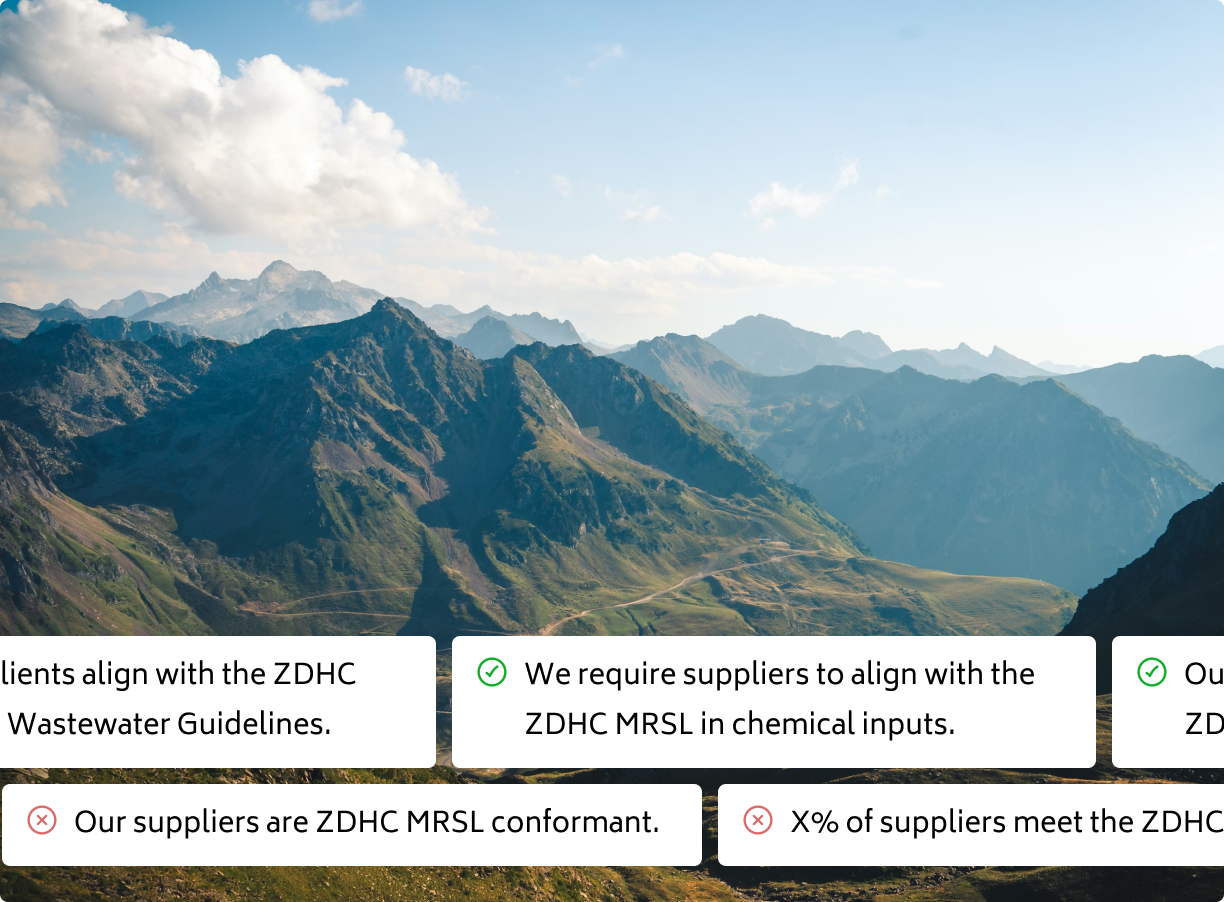
Support your brand’s credibility with clear, accurate claims about your alignment with the ZDHC MRSL and guidelines. A clear framework designed for brands outside the ZDHC programme.

Register your claim

Registration is open to brands and free of charge

Strengthen the credibility of your claims

Register clear, accurate and substantiated alignment claims that reflect your organisation's actual commitments and practices.

Navigate growing regulatory scrutiny

As expectations and regulations around environmental claims evolve, communicate your alignment with greater clarity and confidence.

Protect the integrity of ZDHC

Help prevent misleading or overstated references to the ZDHC MRSL and guidelines and the Roadmap to Zero Programme, safeguarding their credibility.

Help us see the bigger picture

Help ZDHC understand how its requirements are being adopted beyond formal Programme participation and demonstrate their wider reach and influence.

How claim registration works

This framework standardises how organisations reference ZDHC and Roadmap to Zero.

What can I register?

Any brand can register alignment claims with ClaimCheck. ZDHC Friends and Signatories can also make implementation and performance claims.

Alignment claims

How your brand references or adopts ZDHC frameworks in its policies or supplier requirements.

e.g. “Our chemical management policy adopts the ZDHC MRSL.”

Register an alignment claim →

Friends & Signatories

Implementation claims

How your brand puts the Roadmap to Zero Programme into practice across its organisation and supply chain.

e.g. “We implement the ZDHC MRSL through the Roadmap to Zero Programme.”

Explore participation options →

Friends & Signatories

Performance claims

Measurable progress, backed by ZDHC data from your supply chain.

e.g. “82% of chemical products reported by participating suppliers meet ZDHC MRSL Conformance Level 1 or above.”

Explore participation options →

The Claims Registry is coming soon

We’re building the ZDHC Claims Registry, a place to see which brands publicly align with the ZDHC MRSL, guidelines and other frameworks. This section is under construction and will be released soon.

Register your claim here

Already referencing the ZDHC MRSL, the SCMF or related guidelines in your public communications? We'd like to know about it!

Registering your claim helps make your alignment with ZDHC visible, supports credible and transparent communication, and helps us understand the wider reach of ZDHC across the industry.

‍

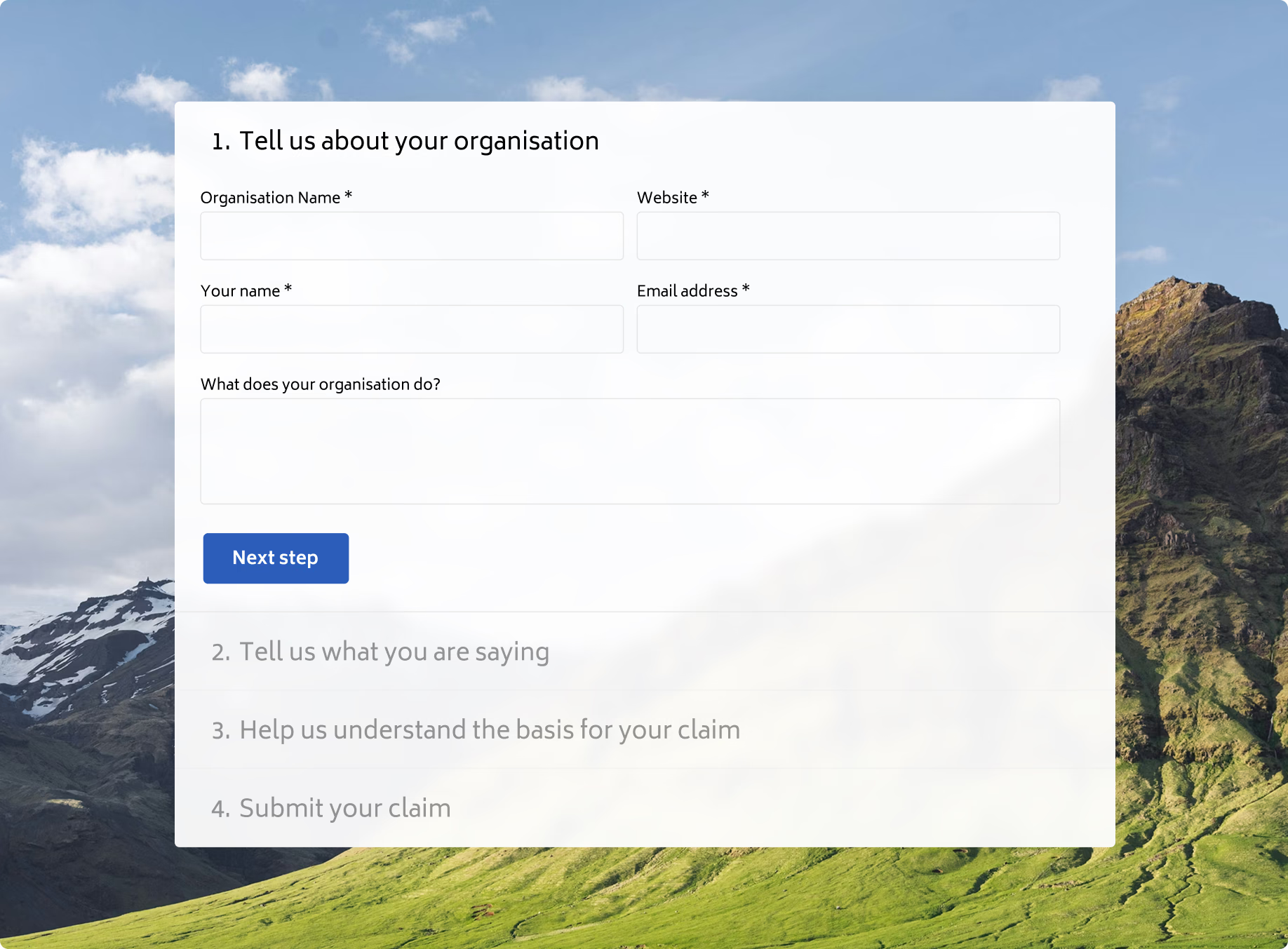
1. Tell us about your organisation

Edit

2. Tell us what you are saying

Edit

Claim 1

Claim preview

Incomplete

Remove

Please enter the claim exactly as it appears, or will appear, in your (public) communication.

Where is this claim being made?

What is your claim based on?

Tell us briefly about the information or evidence supporting your claim.

+ Add a claim

3. Submit your claim

We'll review your claim and the information you've provided to check that it accurately references ZDHC and fits within the scope of the claims framework.

If everything looks good

We’ll register your claim and make your organisation’s alignment visible through the ZDHC Claims Registry.

If we need a little more information

We’ll get in touch to better understand the basis for your claim or ask for supporting information.

If the wording goes beyond what can be supported

...or suggests a level of Roadmap to Zero Programme participation, implementation or performance that isn’t applicable, we’ll let you know. We’ll explain why and, where possible, help you adjust the wording or advise you on the appropriate next step.

Oops! Something went wrong while submitting the form.

Registering tells us how you reference ZDHC. It doesn't mean ZDHC has verified your organisation's performance, or that you take part in the Roadmap to Zero Programme.

To implement the Roadmap to Zero Programme, or to back your claims with supplier data from the ZDHC Gateway, become a ZDHC Friend or Signatory.

EXPLORE PARTICIPATION

The evolved ZDHC brand engagement model

Signatory brands

Leadership community shaping the future of sustainable chemical management.

Friend brands

Brands actively implementing the Roadmap to Zero through structured engagement with the programme.

NEW

Brands can be friends indefinitely.

Gateway

ZDHC single source of truth for RtZ programme data.

Registered claims

NEW

For brands outside the formal programme that want to reference alignment with ZDHC frameworks.

Unauthorized claims

Claims outside the model will be considered unsupported and may require removal

FAQ

ClaimCheck in one minute

What is ClaimCheck?

ClaimCheck is ZDHC’s framework for brands that are not ZDHC Friends or Signatories, but reference, adopt or align with elements of ZDHC’s Sustainable Chemical Management Framework (SCMF), such as the ZDHC MRSL or related guidelines.

It provides a way for these brands to register eligible public claims with ZDHC. ClaimCheck reviews whether claims are clearly defined, verifiable and designed in a credible way, in line with recognised guidance for environmental claims. Registered claims are included in the ZDHC Claims Registry.

This helps make legitimate alignment with ZDHC visible, while reducing the risk of ZDHC terminology, tools or frameworks being used inaccurately or in ways that could imply a relationship or level of recognition that does not exist.

Why is ZDHC introducing ClaimCheck?

Many brands already reference the ZDHC MRSL, the SCMF and related guidelines in their policies, supplier requirements and public communications without formally participating in the Roadmap to Zero Programme.

ClaimCheck creates a clearer and more consistent way for these brands to communicate that alignment. It is designed both to enable clearer, more credible claims and to protect the integrity of how ZDHC is referenced, by establishing boundaries around what can appropriately be claimed and how those claims should be formulated.

It also gives ZDHC greater visibility into the reach and adoption of its work beyond formal programme participation, while providing a pathway for brands already aligned with elements of the SCMF to engage more closely with ZDHC over time.

Do I need to be a ZDHC Friend or Signatory to use ClaimCheck?

No. ClaimCheck is specifically intended for brands that are not Friends or Signatories but use or reference elements of ZDHC’s SCMF and want to communicate that alignment publicly.

ClaimCheck does not replace participation in the Roadmap to Zero Programme. Claims that imply programme participation, implementation or recognised ZDHC performance can only be made where the relevant participation, assessment or data requirements are met.

What does ZDHC assess when a claim is registered?

At this stage, ClaimCheck assesses the claim itself, rather than verifying the underlying supporting documentation or performance. ZDHC considers whether the claim is sufficiently specific and verifiable, whether its wording is proportionate to what is being communicated, and whether it is designed in line with recognised principles for credible environmental claims, including relevant ESMA guidance.

Registration therefore means that the design and formulation of the claim have been reviewed. It does not mean that ZDHC has independently verified the evidence behind the claim or confirmed that the claimed performance has been achieved.

Does registering a claim mean my brand participates in the Roadmap to Zero Programme?

No. ClaimCheck recognises a specific registered claim, not participation in the Roadmap to Zero Programme. Registration does not make an organisation a ZDHC Friend or Signatory and must not be used to suggest a formal relationship, programme participation or level of implementation that the organisation does not have.

Does registration mean ZDHC endorses my brand or its sustainability performance?

No. Registration means that ZDHC has reviewed the formulation and verifiability of a specific claim. It does not constitute verification of the underlying evidence or broader endorsement of the brand, its products, its chemical management programme or its overall sustainability performance.

The purpose of ClaimCheck is to support clearer and more credible communication about alignment with ZDHC, while helping prevent misleading, unverifiable or inappropriate references to ZDHC.

About the ClaimCheck tool

What types of claims can I submit to ClaimCheck?

ClaimCheck is for public claims that reference or rely on ZDHC, including the ZDHC MRSL, Sustainable Chemical Management Framework (SCMF) and related guidelines, the Roadmap to Zero Programme, ZDHC tools or ZDHC data. Claims that do not reference or rely on ZDHC fall outside the scope of ClaimCheck.

Do I need to register a claim before publishing it?

You can submit a claim that you are planning to publish or one that is already public.

For new claims, submitting before publication gives ZDHC the opportunity to review whether the proposed wording is clear, verifiable and appropriately references ZDHC before it becomes public. Existing public claims can also be submitted for registration.

What information will I need to provide?

We will ask for the exact wording of the claim, where it appears or will appear, and some contextual information to help us understand what is being communicated and how ZDHC is being referenced.

Depending on the type of claim, we may also ask for information that helps us understand its scope or basis. At this stage, ClaimCheck does not independently verify the underlying supporting documentation or performance.

What happens after I submit my claim?

ZDHC will review whether the claim falls within the Claims Framework and whether it is clear, specific and verifiable, appropriately references ZDHC, and is designed in line with recognised principles for credible environmental claims.

If the claim meets these requirements, it can be registered. If the wording is unclear, too broad or could create a misleading impression, we may ask for clarification or suggest adjustments before registration.

Registration reflects ZDHC’s review of the design and formulation of the claim. It does not mean that ZDHC has independently verified the underlying evidence or confirmed the performance described in the claim.

What if ZDHC identifies a claim from my brand that hasn't been registered?

ZDHC may identify public claims that reference ZDHC and invite the brand to register them through ClaimCheck. The aim is both to make wider alignment with ZDHC visible and to help ensure that references to ZDHC are clear, credible and used appropriately. Where a claim could be misleading, unverifiable or inconsistent with the Claims Framework, registration also provides an opportunity to clarify or adjust the claim.

Will registered claims be publicly visible?

ZDHC intends to provide public visibility of the types of claims brands have registered, rather than necessarily publishing each claim exactly as submitted. Claims may be grouped into categories, for example showing which brands have registered alignment, implementation or measurement claims. This will help make the wider use and adoption of ZDHC approaches visible and provide greater transparency around how brands are referencing ZDHC.

Being listed under a claim category means that the brand has registered a claim of that type through ClaimCheck. It does not mean that ZDHC has independently verified the underlying performance or broadly endorsed the brand or its sustainability performance.

Claims Framework

What kinds of ZDHC-related claims are there?

The Claims Framework distinguishes between three broad types of claims: alignment, implementation and measurement. Each describes a different way in which a brand may reference ZDHC and has different requirements around what can credibly be communicated.

For brands that do not participate in the Roadmap to Zero Programme as a ZDHC Friend or Signatory, ClaimCheck considers alignment claims only. Implementation and measurement claims are linked to formal programme participation and/or access to relevant ZDHC performance data and therefore fall outside the ClaimCheck route for non-participating brands.

What is an alignment claim?

Alignment claims describe how a brand adopts, references or incorporates elements of ZDHC’s Sustainable Chemical Management Framework (SCMF), such as the ZDHC MRSL or related guidelines, within its own policies, commitments or supplier requirements.

For example: “Our supplier chemical requirements adopt the ZDHC MRSL.”

A brand can also communicate what it asks or requires suppliers to do, without implying that the brand itself participates in or implements the Roadmap to Zero Programme.

What is an implementation claim?

Implementation claims describe participation in or implementation of the Roadmap to Zero Programme, including its recognised implementation pathways, tools and solutions.

For example: “We implement the ZDHC MRSL through the Roadmap to Zero Programme.”

Implementation has a specific meaning within the Claims Framework and requires the appropriate level of programme participation. The SCMF provides the framework for sustainable chemical management, while the Roadmap to Zero Programme provides the recognised pathway for putting that framework into practice.

What is a measurement claim?

Measurement claims communicate a specific, measurable result or level of performance using ZDHC-related performance data. For example: “82% of chemical products reported in our participating suppliers’ inventories meet ZDHC MRSL Conformance Level 1 or above.”

Measurement claims should be specific about what is being measured, the relevant scope and, where appropriate, the reporting period. They should be formulated so that the claim can be verified and should not go beyond what the relevant data can demonstrate.

Can I say that my brand “implements the ZDHC MRSL” if we are not participating in the Roadmap to Zero Programme?

No. Within the Claims Framework, implementation has a specific meaning. It goes beyond adopting or referencing the ZDHC MRSL and implies use of the recognised Roadmap to Zero Programme implementation pathway. If your brand incorporates the ZDHC MRSL into its policies or supplier requirements but does not participate in the Roadmap to Zero Programme, this should instead be communicated as alignment.

Can I say that I require my suppliers to implement ZDHC requirements?

Yes, provided the claim clearly describes your brand’s requirement or expectation. For example, you might state that your brand requires suppliers to follow the ZDHC MRSL or particular ZDHC guidelines. This is different from claiming that suppliers have implemented or achieved those requirements. That is a claim about actual implementation or performance and should only be made where it can be appropriately substantiated.

What if my claim is too broad or cannot be clearly verified?

ClaimCheck may suggest narrowing or adjusting the wording so that the claim is specific, proportionate and capable of being substantiated. This does not necessarily mean that you cannot communicate about your work. Often, a more precise formulation can accurately communicate what your brand is doing without implying a level of participation, implementation or performance that the claim cannot demonstrate.

Where the intended claim requires participation in the Roadmap to Zero Programme or access to ZDHC performance data, we will explain the relevant requirements.

Is a registered claim the same as a verified claim?

No. Registration means that ZDHC has reviewed the formulation of the claim and determined that it is eligible for ClaimCheck and designed in a way that is clear, credible and verifiable.

At this stage, ClaimCheck does not independently verify the underlying documentation or confirm that the activities or performance described in the claim have been achieved. Brands remain responsible for ensuring that their claims can be substantiated.

Registration should therefore not be described as ZDHC verification or endorsement of the brand, its products or its overall sustainability performance

Why does the wording of a claim matter so much?

Small differences in wording can significantly change what a claim communicates. For example, saying that a brand “adopts” the ZDHC MRSL is different from saying that it “implements” the ZDHC MRSL through the Roadmap to Zero Programme. Clear wording helps ensure that claims are specific, understandable and verifiable, and that they do not imply a relationship with ZDHC, level of programme participation or level of performance that goes beyond what is actually being communicated.

Data, Evidence and Claims

What information should sit behind a ZDHC-related claim?

Claims should be specific, clear and capable of being verified. Brands should be able to substantiate what they communicate and ensure that the wording does not go beyond what their policies, activities or data can demonstrate.

The type of information relevant to a claim will depend on what is being communicated. An alignment claim, for example, may relate to a brand’s policies or supplier requirements, while a measurement claim will depend on relevant performance data.

Does ClaimCheck verify the evidence behind my claim?

Not at this stage. ClaimCheck reviews the claim itself to determine whether it is appropriately formulated, sufficiently specific and verifiable, and consistent with the Claims Framework and recognised principles for credible environmental claims.

ZDHC does not currently independently assess the underlying supporting documentation or verify that the performance described in the claim has been achieved. Brands remain responsible for ensuring that they can substantiate the claims they make.

What is the role of ZDHC Gateway data in claims?

The ZDHC Gateway is the recognised source environment for ZDHC performance data, including information related to MRSL conformance, InCheck and ClearStream.

Brands with the appropriate access may use Gateway data within their own analysis, reporting and claims processes. Claims based on this data should clearly define what is being measured, the relevant scope and, where appropriate, the reporting period.

Can I use ZDHC-related data obtained from suppliers or other platforms?

Yes. Brands may use information received directly from suppliers or through other platforms within their own chemical management, due diligence and reporting processes.

However, ZDHC can only provide assurance over ZDHC data within the Gateway environment. Once data has been exported, shared or handled elsewhere, ZDHC cannot provide the same assurance over how it has subsequently been maintained, interpreted or used.

This does not mean that data from other sources is unreliable; other platforms or assurance providers may have their own data governance and verification processes. Whether data obtained outside the ZDHC Gateway can be used as the basis for a public ZDHC-related claim will therefore be considered on a case-by-case basis, taking into account the nature of the claim, the data source and how ZDHC is being referenced.

Does using ZDHC data mean ZDHC has verified my claim?

Not necessarily. Using data from the ZDHC Gateway can provide a recognised basis for a claim, but it does not in itself mean that ZDHC has verified or endorsed the brand’s resulting claim.

ZDHC can provide assurance over the source and integrity of data within the Gateway environment. How that data is selected, analysed and translated into a public claim may involve additional decisions by the brand.

Whether ZDHC can recognise or stand behind a specific data-based claim will therefore depend on the nature of the claim and will be considered on a case-by-case basis. Where a specific ZDHC assessment, verification or recognised performance level applies, this should be clearly distinguished from the brand’s own analysis and communication.

Can I use ZDHC-related data obtained from suppliers, other platforms or industry programmes?

Yes. We recognise that brands may access and use ZDHC-related information through suppliers, other platforms or industry programmes, including programmes that work with or incorporate elements of ZDHC’s framework. Brands may use this information within their own chemical management, due diligence and reporting processes.

However, ZDHC recognition of a public claim is different from a brand using ZDHC-related information in its own reporting. Where a claim relies on data accessed through another platform or programme, ZDHC will not automatically recognise it as a ZDHC data or performance claim.

Whether and how ZDHC can be referenced in such a claim will be considered on a case-by-case basis, taking into account the nature of the claim, the source of the data and the brand’s participation in the Roadmap to Zero Programme.

If ZDHC-related data is available through another programme or platform, can I make the same claims as a ZDHC Friend or Signatory?

No. Accessing or using ZDHC-related data through another programme or platform is not equivalent to participating in the ZDHC Roadmap to Zero Programme.

Roadmap to Zero participation goes beyond measuring supply chain performance. It involves taking a holistic approach to sustainable chemical management, including setting and communicating requirements, actively engaging and onboarding suppliers into the Programme, supporting supplier capacity building and implementation, using ZDHC Guidelines, Platforms and Solutions, and monitoring and driving continuous improvement across the supply chain.

ZDHC works with other industry programmes and platforms, and ZDHC-related data or requirements may therefore also be available through those channels. Brands may use this information within their own sustainability and reporting processes, but this does not provide the same basis for making claims about ZDHC or Roadmap to Zero implementation.

For brands that do not participate in the Roadmap to Zero Programme, ClaimCheck provides a route to register eligible alignment claims.

What if my claim or data has been independently assured?

Independent third-party assurance may strengthen the basis for a brand’s own claim, but it does not automatically make the claim recognised or verified by ZDHC.

Similarly, third-party assurance, including assurance provided through another industry programme or platform, does not replace participation in the Roadmap to Zero Programme or provide the same basis for making ZDHC implementation or performance claims.

Where relevant, the role of independent assurance and how ZDHC may be referenced will be considered on a case-by-case basis.

Fees & Registration

Is it free to register a claim?

Yes. Registering an eligible claim through ClaimCheck is free of charge. This includes its inclusion within ZDHC’s public overview of registered claim categories.

Will ZDHC offer additional support with developing or reviewing claims?

We recognise that some brands may need more tailored support in understanding how the Claims Framework applies to their organisation or in developing clear and credible claim wording.

We are exploring an optional tailored support service for brands that would like additional guidance. This would be separate from the standard ClaimCheck registration process, which remains free.

Does paying for tailored support guarantee that my claim will be registered?

No. Any paid support service will remain separate from the ClaimCheck registration decision.

Tailored support may help a brand understand the Claims Framework, determine which type of claim may be appropriate and develop wording that is clear, specific and verifiable. All claims will still be considered against the same ClaimCheck registration criteria.

Do I need to register the same claim every time I use it?

No. If the same claim is used consistently across different communications, you do not need to register every occurrence separately. If the substance of the claim changes, for example, its scope, meaning or what is being communicated, it should be submitted as a new or updated claim.

Can I register more than one claim?

Yes. Brands can register multiple eligible ZDHC-related claims. Each materially different claim should be submitted separately so that it can be considered in the appropriate context.

How long is a registered claim valid?

A registered claim is valid for one year, provided there is no material change to the claim or the circumstances on which it is based. After one year, the registration will need to be renewed to remain active. If it is not renewed, the registration will expire.

What if something changes before the one-year period ends?

If there is a material change that affects the meaning, scope or basis of the registered claim, we ask you to submit an updated claim rather than waiting for the annual renewal.

Minor changes that do not affect the substance of the claim (such as formatting or using the same claim in a different communication) do not require a new registration.

Can I renew or update my claim?

Yes. Brands will be able to update or renew registered claims. For the time being, this will not require a ClaimCheck account. As ClaimCheck develops, we may introduce accounts if they make it easier for brands to manage multiple claims, updates and renewals.

Do I need a ClaimCheck account?

No. You do not currently need to create an account to register a claim. We want to keep the process as simple as possible while ClaimCheck is being introduced. As the service develops, we may introduce accounts to make it easier for brands to manage their registered claims.

How long will it take to review my claim?

As ClaimCheck is newly launching, we are not setting a standard review time yet. We first want to understand the volume and complexity of claims being submitted and the level of review required. Once we have more experience with the registration process, we will provide clearer guidance on expected review times.

ClaimCheck and participation in the Roadmap to Zero Programme

What is the difference between registering a claim and participating in the Roadmap to Zero Programme?

ClaimCheck provides a route for non-participating brands to register eligible alignment claims about how they adopt or reference elements of ZDHC’s Sustainable Chemical Management Framework (SCMF).

Participation in the Roadmap to Zero Programme goes further. It means taking a structured and holistic approach to implementing sustainable chemical management across the supply chain. This includes setting and communicating requirements, engaging and onboarding suppliers, supporting capacity building, using ZDHC Guidelines, Platforms and Solutions, monitoring progress and driving continuous improvement.

Participation also provides access to relevant supplier performance data through the ZDHC Gateway and creates the appropriate pathway for making claims related to Roadmap to Zero implementation and, where applicable, performance.

What are the different ways to participate in the Roadmap to Zero Programme?

Brands can participate in the Roadmap to Zero Programme as a ZDHC Friend or ZDHC Signatory.

Both provide a pathway for brands that want to move beyond alignment and actively implement the Roadmap to Zero Programme within their organisation and supply chain. The appropriate participation route depends on the organisation’s level of commitment, intended role within the Programme and how deeply it wants to engage with ZDHC and the wider community.

When should I consider becoming a ZDHC Friend or Signatory?

If your organisation wants to move beyond referencing or aligning with elements of ZDHC’s framework and towards actively implementing the Roadmap to Zero Programme, Friend or Signatory participation provides the appropriate pathway.

This is particularly relevant where a brand wants to systematically engage its supply chain, support supplier implementation and capacity building, monitor progress through ZDHC tools and data, or communicate publicly about its implementation of the Roadmap to Zero Programme.

Does registering a claim mean I am expected to become a Friend or Signatory later?

No. ClaimCheck is not a staged membership process, and registering an alignment claim does not create an obligation to become a ZDHC Friend or Signatory.

However, if a brand’s ambitions develop from alignment towards implementation, or it wants to make claims that rely on Roadmap to Zero participation or ZDHC performance data, Friend or Signatory participation provides the appropriate next pathway.

Contact ZDHC before publishing
Mentioning supplier performance or Roadmap to Zero participation may require a different license.

licensing@zdhc.org

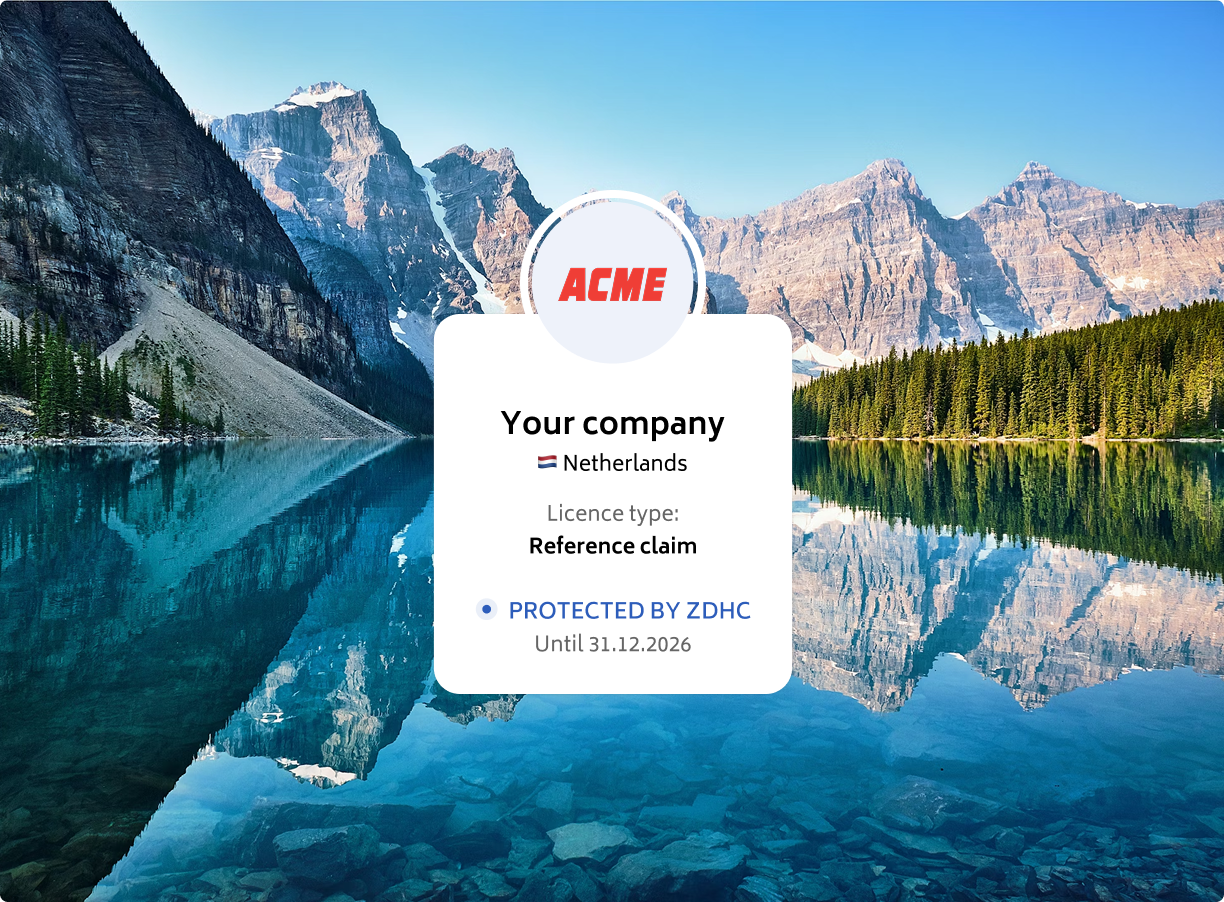
Registry under development

The public registry of licensed organisations is currently being developed. Once live, this page will display all brands and service providers who hold a valid ZDHC Reference Licence.

Thank you! Your submission has been received!
Oops! Something went wrong while submitting the form.