Bringing forward initiatives created by external organisations to enhance sustainable chemical management and environmental performance across the value chain. These efforts often include participation from the ZDHC Committed Community, showing how shared action can help move the industry toward the Roadmap to Zero.
Africa
Asia
Clothing & Textiles Circular Economy Project, Southern Africa
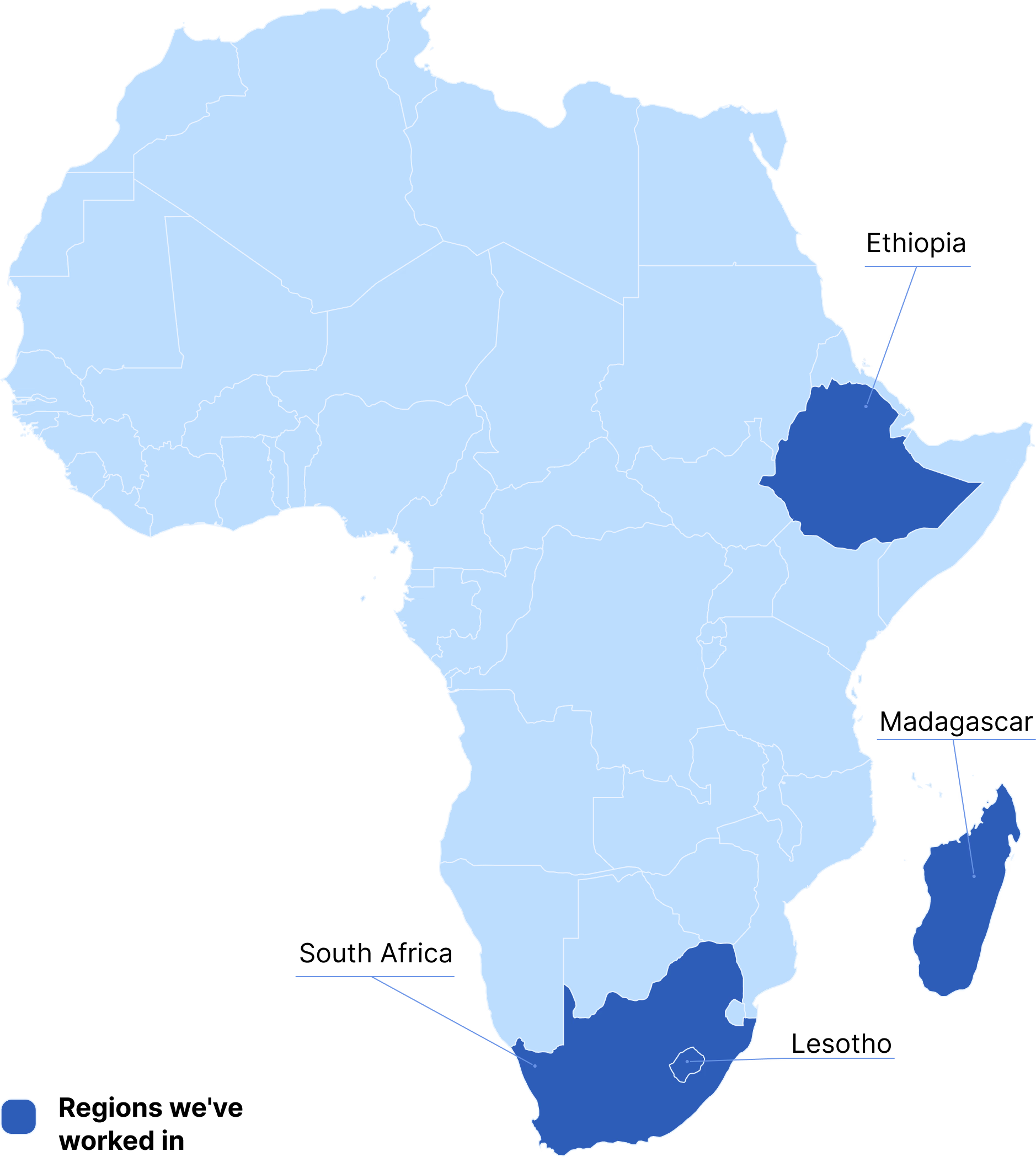
The project is funded by GEF and implemented by UNIDO . It aims to promote a circular economy in the textile and garment sector through the sustainable management of chemicals and waste, targeting South Africa, Lesotho, Madagascar and Ethiopia. Its objectives include eliminating hazardous substances such as POPs and fostering recycling and reuse practices to reduce environmental impact while supporting economic growth.
In doing so, the project supports the Stockholm Convention on POPs and helps reduce greenhouse gas emissions, addressing global climate change alongside its regional environmental and economic goals.
Learn more →
Protecting Biodiversity and Water Resources through Sustainable Chemical Management in the Textile, Apparel and Leather Industry
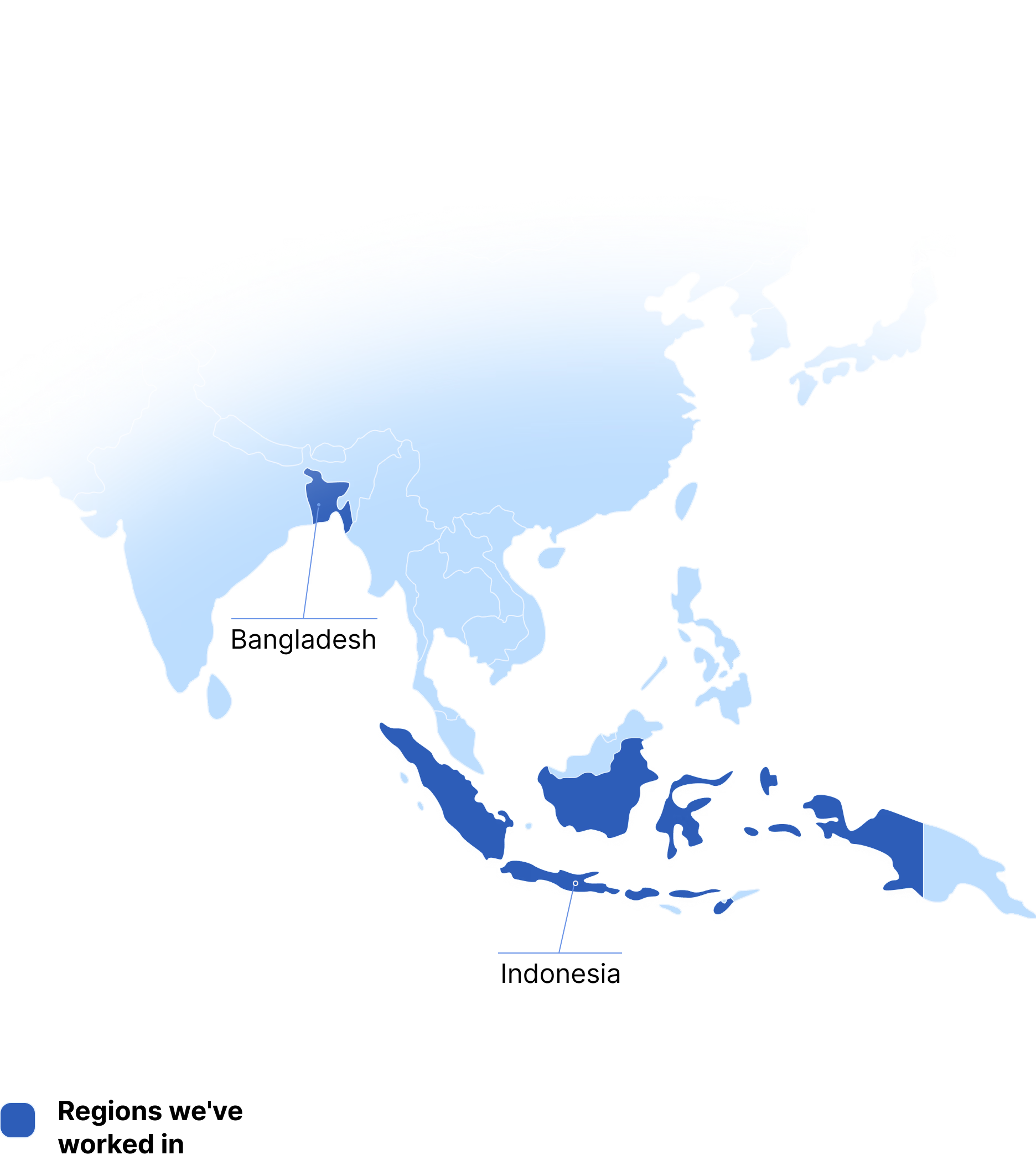
The Protecting Biodiversity and Water Resources through Sustainable Chemical Management project aims to improve environmental performance across Bangladesh’s textile, apparel and leather sector. It will support 100 factories, with a focus on wet-processing facilities with significant chemical and wastewater impacts and strong potential for improvement.Through capacity building, technical assistance, ZDHC tools, wastewater testing and monitoring, factories will strengthen chemical management, wastewater performance and internal capabilities. The project will also assess impacts on water quality and biodiversity and engage government, industry associations, brands and research partners to strengthen local capacity and support wider sector transformation.The initiative is co-funded by AFD and ZDHC, combining AFD’s financial contribution with ZDHC’s in-kind contribution.
ZDHC is one of the supporting partners within the project
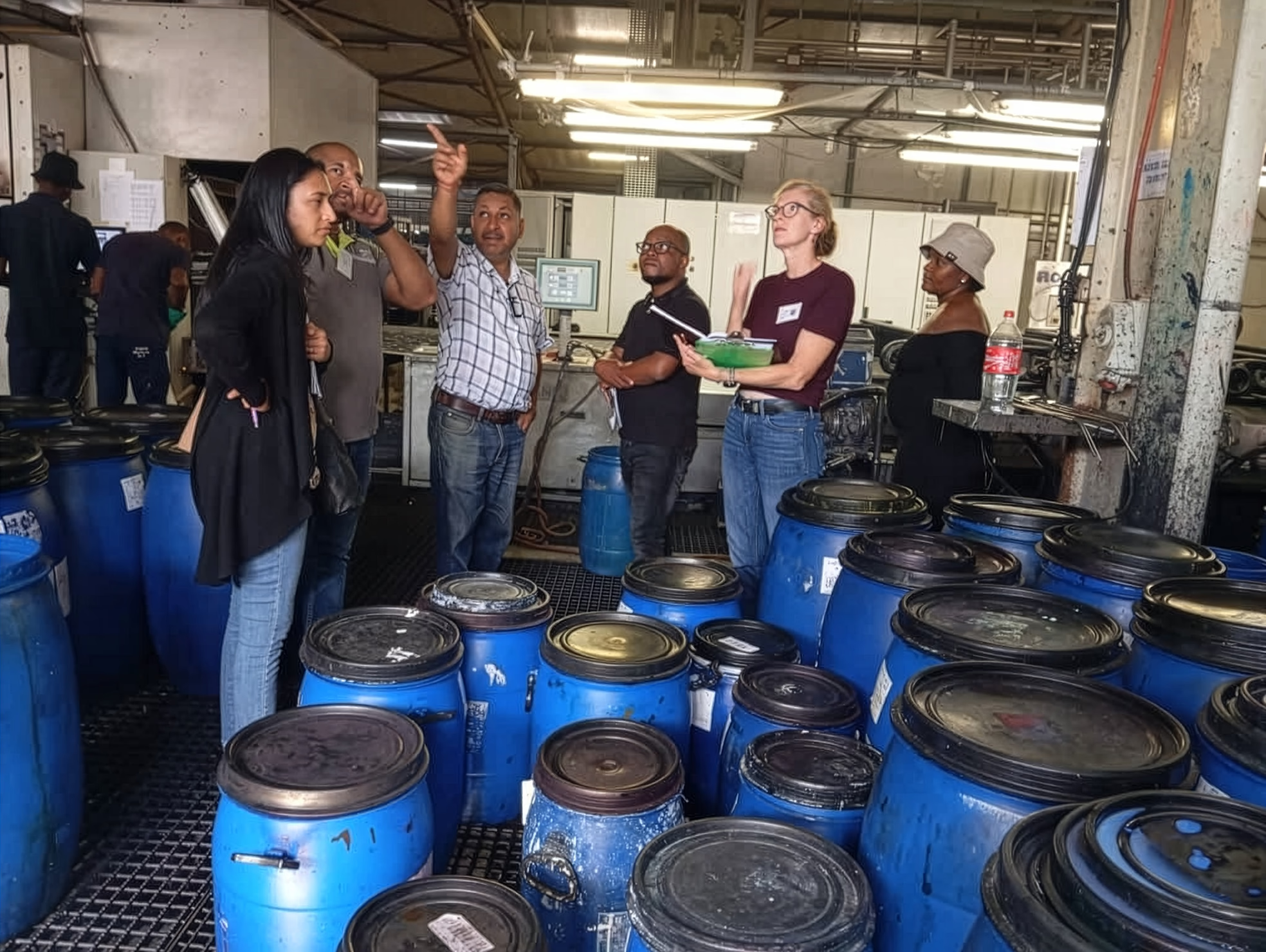
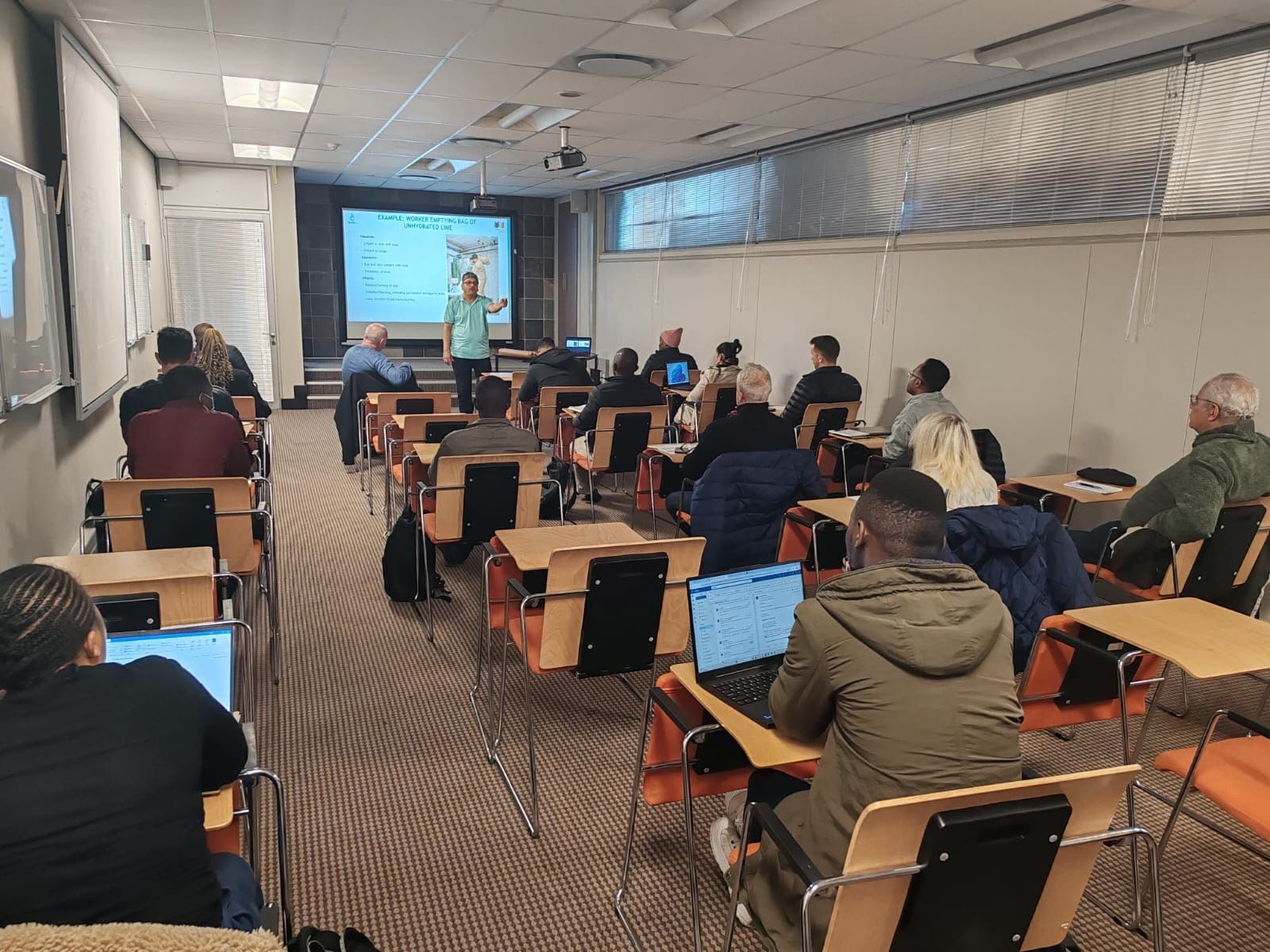
We’re focusing on capacity-building activities related to sustainable chemical management practices through training programmes, workshops and on-site support at the 30 beneficiary facilities spread across the four countries.
&
Amin & Jahan Corporation
ZECOPSIS and A&J jointly lead implementation in Bangladesh, combining international expertise with local knowledget
Working alongside AFD and ZDHC, they coordinate factory-level delivery, with SGS Bangladesh leading the training programme.
Enabling Circular Transition
Strengthen regulatory and institutional capacity to advance circular-economy practices across the textile and garment sector.
ZDHC Biggest impact
Cleaner Textile Production
Support POPs-free textile manufacturing through Best Available Techniques, environmental practices, resource-efficient production, and cleaner-production investments.
Circular Economy Demonstration
Introduce circular-economy solutions that reduce POPs emissions through sustainable manufacturing and pilot textile and garment waste recycling.
ZDHC Biggest impact
Knowledge for Scale
Build and share practical knowledge to scale circular manufacturing, pollution reduction, and sustainable textile-sector transformation.
Implementation Coordination
ECOPSIS and A&J coordinate project activities, factory engagement and delivery on the ground, ensuring the different elements of the programme work together.
Training & Capacity Building
SGS Bangladesh leads the training programme, building the knowledge and capabilities of factory staff and ETP operators to strengthen chemical and wastewater management.
Hands-on Technical Support
Factories receive practical coaching and implementation support to apply ZDHC tools, address gaps and develop improvement plans.
Monitoring & Improvement
Regular follow-up, wastewater testing and performance monitoring help factories track progress, identify areas for improvement and turn learning into sustained action.
Projects details
2024 — 2026
South Africa
10 beneficiary companies trained in sustainable chemical management under theNational Cleaner Production Center SA (NCPC-SA), with a local task force of12experts carrying the work forward.
8 beneficiary companies trained in sustainable chemical management under the Textile and Garment Industry Research and Development Center, with a local task force of 15 experts carrying the work forward.
6 beneficiary companies trained in sustainable chemical management under the Ministry of Environment and Forestry, with a local task force of 11 experts carrying the work forward.
4 beneficiary companies trained in sustainable chemical management under the Ministry of Environment and Sustainable Development, with technical support extended to all 4 through a ZDHC Approved Solution Provider.
These projects are now finished. Read what the project was about, and the case studies that came out of them.
UNIDO North Africa
Chemical management training across Morocco, Tunisia and Egypt, completed in 2024.
Learn more →
Better Mill Initiative - Solidaridad
Cleaner production adopted across 8 Bangladesh factories with 4 Dutch brands, finished 2026.
Learn more →
South Africa
The National Executing Entity (NEE) in South Africa is the National Cleaner Production Center South Africa (NCPC-SA)
10 beneficary companies
Beyond the beneficiary facilities, the project also brought together a diverse group of key stakeholders, including industry associations, ministry representatives, academia, and environmental consultants. These participants took part in the ZDHC training sessions, with a select group nominated by the National Executing Entity (NEE) to form a local task force. Through an intensive train-the-trainer programme, they were equipped to become future local experts and champions of sustainable chemical management, helping to build lasting in-country capacity long after the project concludes.
Timeline
Jun-Aug 2024
CMS TIG Training and WWM Training
Jul 2024
On-site support at facilities
Apr 2025
ToT for local teams
Jul 2024
Identification potential labs
The key milestones achieved so far:
ZDHC introductory webinar, which was a precursor to the in-person training sessions.
In person ZDHC training on sustainable chemical management and wastewater management"
On-site facility visits to provide technical support and advice on the development and implementation of a Chemical Inventory List (CIL) based on ZDHC templates and to assess the chemical management practices and ensure compliance with the ZDHC MRSL.
Train of trainers session for a selected group of local experts, preparing them to become future local experts on sustainable chemical management.
A gap analysis of 7 laboratories in South Africa against the instruments required for testing MRSL substances.
Key numbers:
4
ZDHC in-person training sessions completed
35
ZDHC training certificates achieved
12
task force members participated in the Train of Trainers session
8
Beneficiary companies got technical support from ZDHC Approved Solution Provider
Ethiopia
The National Executing Entity (NEE) in Ethiopia is the Textile and Garment Industry Research and Development Center.
8 beneficary companies
In addition to the beneficiary facilities, the project engaged a broad range of stakeholders, including industry associations, environmental consultants, and ministry representatives. These stakeholders participated in the ZDHC training sessions, with a select group nominated by the NEE to form a local task force. Through a dedicated train-the-trainer programme, they gained the knowledge and skills to become local experts in sustainable chemical management, strengthening national capacity and ensuring the project's impact continues well into the future.
Timeline
Oct 2024
CMS TIG Training and WWM Training
Dec 2024
On-site support at facilities
Dec 2024
ToT for local teams
Dec 2024
Identification potential labs
The key milestones achieved so far:
ZDHC introductory webinar, which was a precursor to the in-person training sessions.
In person ZDHC training on sustainable chemical management and wastewater management"
On-site facility visits to provide technical support and advice on the development and implementation of a Chemical Inventory List (CIL) based on ZDHC templates and to assess the chemical management practices and ensure compliance with the ZDHC MRSL.
Train of trainers session for a selected group of local experts, preparing them to become future local experts on sustainable chemical management.
A gap analysis of one laboratory in Ethiopia against the instruments required for testing MRSL substances.
Key numbers:
2
ZDHC in-person training sessions completed
44
ZDHC training certificates achieved
15
task force members participated in the Train of Trainers session
6
Beneficiary companies got technical support from ZDHC Approved Solution Provider
Lesotho
The National Executing Entity (NEE) in Lesotho is the Ministry of Environment and Forestry of Lesotho.
6 beneficary companies
Tzicc Clothing Lesotho
Lesotho Precious Garments
In addition to the beneficiary facilities, the project engaged a broad range of key stakeholders, including industry associations, environmental consultants, academia, and ministry representatives. These stakeholders participated in the ZDHC training sessions, with a select group nominated by the NEE to form a local task force. Through a dedicated train-the-trainer programme, they were equipped to become local experts in sustainable chemical management, helping to build lasting national capacity.
Timeline
Feb 2025
All factory webinar
Feb 2025
Identify learners + access ZDHC e-learning
Mar 2025
CMS TIG Training and WWM Training
Mar 2025
On-site support at facilities
Oct 2025
ToT for local teams
Mar 2025
Identification potential labs
The key milestones achieved so far:
ZDHC introductory webinar, which was a precursor to the in-person training sessions.
In person ZDHC training on sustainable chemical management and wastewater management
On-site facility visits to provide technical support and advice on the development and implementation of a Chemical Inventory List (CIL) based on ZDHC templates and to assess the chemical management practices and ensure compliance with the ZDHC MRSL.
Train of trainers session for a selected group of local experts, preparing them to become future local experts on sustainable chemical management.
A gap analysis of three laboratories in Lesotho against the instruments required for testing MRSL substances.
Key numbers:
2
ZDHC in-person training sessions completed
43
ZDHC training certificates achieved
11
task force members participated in the Train of Trainers session
5
Beneficiary companies got technical support from ZDHC Approved Solution Provider
Madagascar
The National Executing Entity (NEE) in Madagascar is the Ministry of Environment and Sustainable Development of Madagascar
4 beneficary companies
Aquarelle Antananarivo
In addition to the beneficiary facilities, the project engaged other key stakeholders, including industry associations, environmental consultants, and ministry representatives. These stakeholders participated in the ZDHC training sessions, with a select group identified by the NEE to form a local task force. Through a train-the-trainer programme, they received additional training to become local experts in sustainable chemical management.
Timeline
Apr-May 2025
CMS TIG Training and WWM Training
Apr-May 2025
On-site support at facilities
Oct-Nov 2026
ToT for local teams
Apr-May 2025
Identification potential labs
The key milestones achieved so far:
ZDHC introductory webinar, which was a precursor to the in-person training sessions.
In person ZDHC training on sustainable chemical management and wastewater management
On-site facility visits to provide technical support and advice on the development and implementation of a Chemical Inventory List (CIL) based on ZDHC templates and to assess the chemical management practices and ensure compliance with the ZDHC MRSL.
Key numbers:
2
ZDHC in-person training sessions completed
39
ZDHC training certificates achieved
4
Beneficiary companies got technical support from ZDHC Approved Solution Provider
UNIDO North Africa
As part of the European Union (EU) funded SwitchMed Programme, the United Nations Industrial Development Organization (UNIDO) launched a textile initiative in 2019 aimed at improving chemical management in the textile finishing sector across Morocco, Tunisia and Egypt. One of the main axes of intervention was about the introduction of a sustainable chemical management system in collaboration with ZDHC.
The implementation was carried out in three phases:
Phase I
Focused on training companies on chemical management in the textile industry,with an emphasis on ZDHC guidelines.
Phase II
Focused on implementing a full-scale technical assistance programme for six industrial facilities to adopt the ZDHC guidelines and protocols.
Phase III
Focused on extending training and technical assistance to a group of 15 companies, guiding them toward achieving the ZDHC Supplier to Zero Foundational Level. This included gap analysis, training in sustainable chemical management, and the use of online tools for sustainable practices.
The project ended in 2024. For more information about the project and the impact of the Roadmap to Zero Programme at the pilot facilities, refer to the case studies.
The project promotes the adoption of cleaner and more sustainable production processes that align with the principles of environmental responsibility and human well-being.
The Better Mill Initiative (BMI) 1.0 in Bangladesh was supported by the Netherlands Enterprise Agency (RVO) and was carried out in partnership with four Dutch fashion brands and eight of their manufacturers in Bangladesh. The project was initiated in 2022 and finished in February 2026.
The project focused on the adoption of cleaner and more sustainable production processes that align with the principles of environmental responsibility and human well-being.
Key achievements of the BMI 1.0:
Improved energy efficiency, leading to significant cost savings and reduced GHG emissions.
Implementation of the ZDHC Roadmap to Zero Programme across the participating factories, ensuring safer chemical use and environmental protection.
Capacity building through trained management officials and workers, with clear pathways
Defined targets to achieve energy and water efficiency and ensure a safe workplace.
Building Chemical Resilience in Southern Africa’s Textile Industry
How a regional capacity-building project is transforming chemical management from the factory floor to policy level.
Across Southern Africa, the textile and garment industry continues to play a major economic and social role. In countries such as South Africa, Lesotho, Madagascar and Ethiopia, textile manufacturing supports employment, sustains industrial ecosystems and remains closely linked to local economic development.
Yet behind this industrial activity lies a growing environmental challenge that has become increasingly difficult to ignore.
Textile production depends heavily on chemicals at nearly every stage of manufacturing, from dyeing and bleaching to washing and finishing. Poorly managed chemical systems can contaminate waterways, damage ecosystems, create wastewater treatment challenges and generate long-term risks for both workers and surrounding communities.
In many industrial regions, municipalities already struggle to manage textile effluent effectively, while factories themselves often operate under significant financial and technical constraints.
Three interconnected barriers
1
Weak enabling environments
Policies, regulations and supporting systems can limit progress.
2
Limited technical knowledge & capacity
Local skills and expertise are needed to turn ambition into action.
3
Insufficient coordination
Local and global sustainability efforts need to work better together.
* Three structural barriers identified in the UNIDO Project Framework.
Addressing these interconnected barriers requires more than compliance. It means looking at what happens inside factories, strengthening the expertise available locally, improving collaboration between industry and other stakeholders, and ultimately preventing hazardous chemicals from entering production systems in the first place.
The experiences of participants across the project offer important lessons about what that transition looks like in practice.
From managing chemicals to changing processes
At DyeFin Textiles in South Africa, the work provided an opportunity to examine not only which chemicals were being used, but how production processes themselves could be improved.
Specialists worked alongside the factory team to review dyeing processes and identify opportunities to reduce chemical discharge into wastewater. This included examining dye exhaustion rates and chemical optimisation, as well as reviewing chemicals and dyestuffs to identify harmful substances and improve conformity with requirements.
Chemical optimisation
Reviewing chemicals, dyestuffs and dye exhaustion to support safer, more efficient production. The engagement also introduced lower-temperature bleaching systems, with the potential to reduce steam consumption and associated operational costs.
Lower-temperature bleaching
Exploring lower-temperature processes with the potential to reduce steam use and costs. At the same time, DyeFin was developing an effluent recovery plant. Engagement with the project team helped the company validate aspects of its proposed design.
Water recovery
Technical support helped validate aspects of the effluent recovery plant design. Together, these experiences demonstrate how sustainable chemical management can extend beyond compliance. Decisions about chemistry can also affect water use, energy consumption, production efficiency and the commercial viability of environmental improvements.
The challenge does not stop at the factory gate
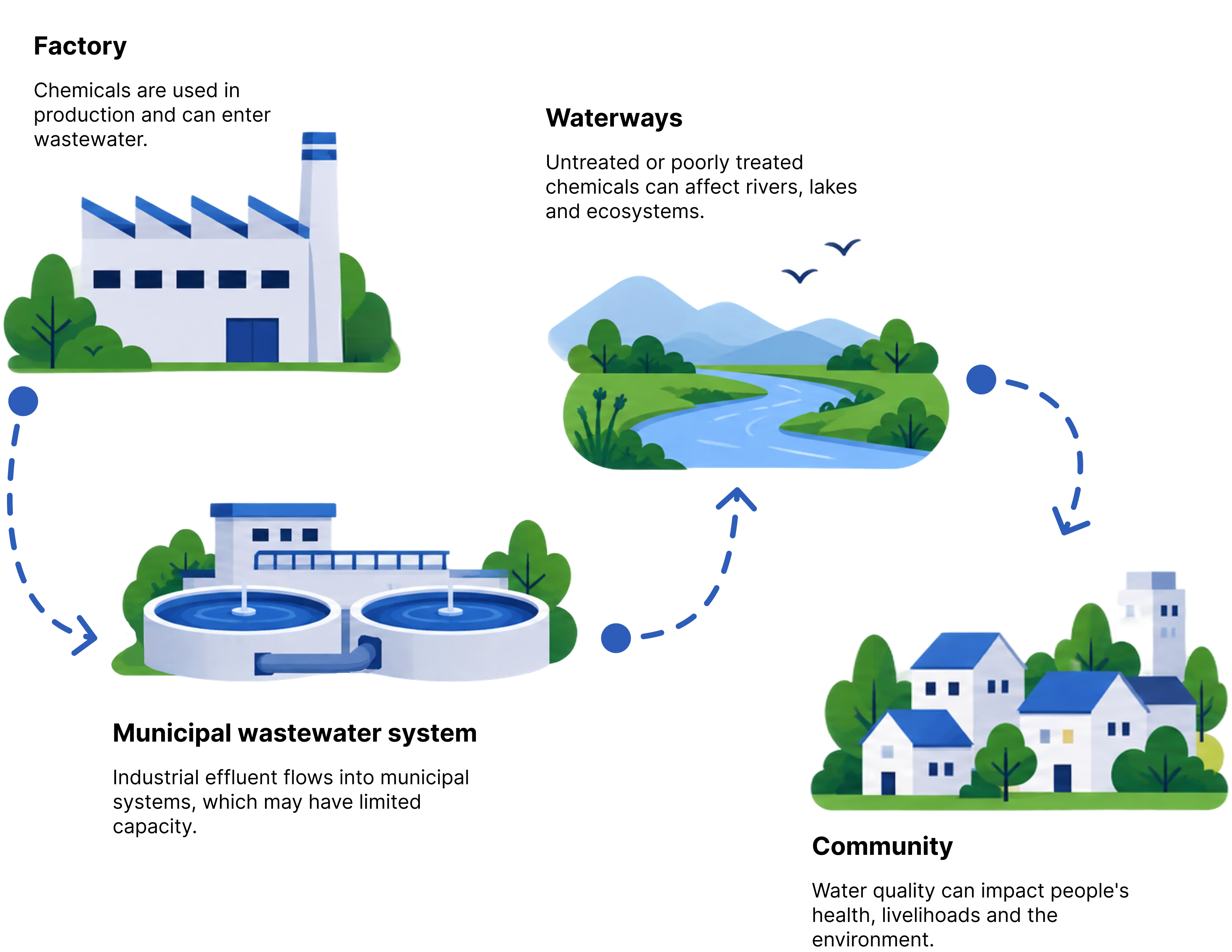
Chemical management within a factory is only one part of the picture. What leaves a facility through its wastewater connects textile production directly with municipal infrastructure, local waterways and surrounding communities.
In South Africa, municipal representatives responsible for wastewater oversight participated in activities focused on textile effluent treatment systems, strengthening local understanding of the challenges associated with industrial textile wastewater.
Participants also highlighted an important regulatory challenge: wastewater requirements can differ between municipalities. For manufacturers, this can create uneven expectations depending on where they operate and make implementation more complex.
It also demonstrates why stronger chemical management requires dialogue between industry and those responsible for receiving, regulating and treating industrial wastewater.
“It’s the first do no harm as opposed to try to fix the harm.”
Preventing harm before it happens
Wastewater treatment remains essential, but treatment begins at the end of the production process. Sustainable chemical management also asks a different question: what can be changed at the beginning?
Treating the impact
Pollution occurs
↓
Wastewater treatment
↓
Remove contaminants
Preventing the impact
Better chemical selection
↓
Stronger inventory management
↓
Improved process control
↓
Reduce hazardous inputs at source
vs.
Better chemical selection, stronger inventory management and improved process control can reduce harmful inputs before they have the opportunity to enter production processes and wastewater systems.
This prevention-first thinking also has important implications for the transition towards a circular textile economy.
Recycling and reuse cannot deliver their full environmental benefits if hazardous chemistry is overlooked. Without responsible chemical management, circular processes risk carrying problematic substances into new materials or creating additional environmental impacts during recycling.
Circularity and safer chemistry, therefore, need to develop together.
The people driving change
The project also highlighted changes in who is driving environmental progress within textile manufacturing.
Women played a prominent role throughout the initiative. In South Africa, many chemical management teams were led by women working directly on factory implementation.
Participants reflected on how the industry has evolved over the past two decades. Technical textile roles that were once heavily male-dominated are increasingly opening to women, particularly within sustainability and environmental management functions.
This represents another dimension of the transition taking place within the sector: environmental progress is being accompanied by changes in the people taking responsibility for delivering it.
Economic pressure
Manufacturers can face narrow margins, unstable production volumes and ageing infrastructure while simultaneously needing to invest in cleaner processes and environmental improvements.
Regulatory complexity
Wastewater requirements can differ between municipalities, creating uneven expectations for manufacturers.
Access to expertise
Specialist knowledge around wastewater systems, membrane technologies, chemical substitution and process optimisation is not always readily available locally.
These challenges create a difficult tension. Environmental improvements have a cost, yet manufacturers making those investments can still compete directly against suppliers operating with lower environmental standards and lower operating costs.
Participants also highlighted the role of purchasing decisions. While manufacturers are being asked to invest in sustainability, commercial decisions across the value chain can remain heavily influenced by price.
The challenge, therefore, is not simply convincing factories that sustainable chemical management matters. It is creating the technical and economic conditions that allow environmental improvements to be implemented and sustained.
Building expertise closer to where it is needed
The difficulty of accessing specialist expertise reinforces another important lesson from the project: long-term progress depends on building knowledge within the region itself.
Where advanced expertise is not readily available locally, manufacturers may need to rely on external specialists, adding cost and making implementation more difficult.
The longer-term opportunity is to build a community of practitioners capable of supporting the region’s textile industry from within — sharing knowledge, adapting solutions to local conditions and reducing dependence on external technical support.
As one trainer described the ambition:
“Our aim is that South Africa can be standing self-reliant with their own team of members who are considered as experts who can deliver value to the entire community.”
The question is therefore not only how knowledge is transferred during a project, but how that knowledge continues to circulate once the project itself has ended.
By strengthening expertise within the region and creating connections between the people responsible for chemical and wastewater management, the foundations are being laid for progress to continue beyond the project itself.