A Natural Capital Approach
Dear ZDHC Community,
Welcome to the ZDHC Impact Report 2025.
The operating environment for our industry is changing fast. Supply chains have had to navigate geopolitical instability, disrupted trade flows, regional political uncertainty, cost pressures, and shifting regulatory expectations. At the same time, artificial intelligence and digital transformation are redefining the pace at which businesses, supply chains, and operating models evolve.
Sustainability has to become part of how our industry builds resilience, manages risk, and protects long-term value. For ZDHC, this reinforces the purpose of the Roadmap to Zero Programme: to align our industry around better chemistry, stronger implementation, credible data and collective impact.
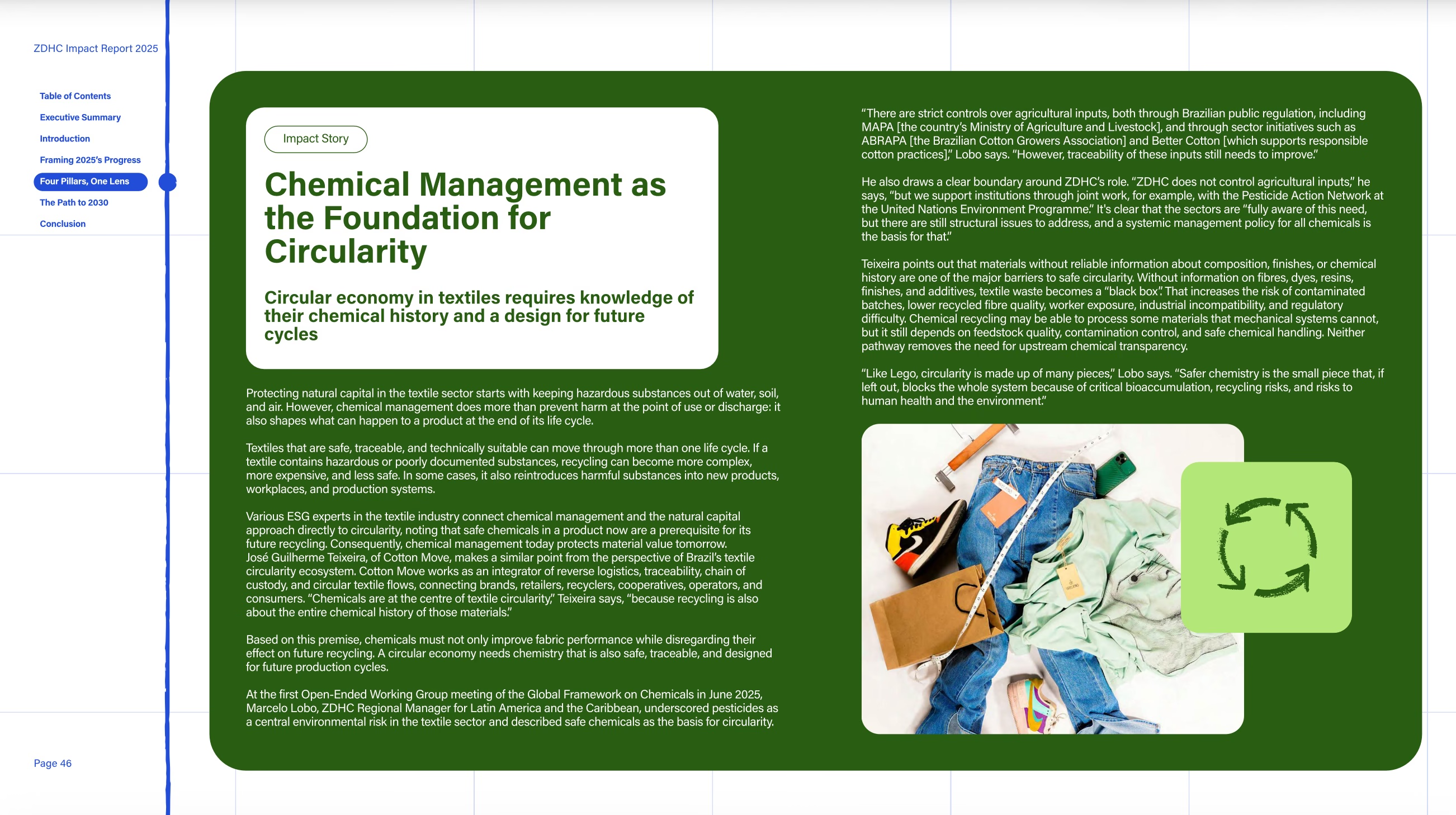
A few years ago, much of the industry conversation was dominated by climate change and the development of climate programmes. At ZDHC, we have always looked at impact more broadly. Climate, water, circularity, and biodiversity are deeply connected to how chemistry is selected, used, managed, and discharged. Today, natural capital is a sharper, more integrated way to explain the purpose of our work: better chemistry protects life, land, air, and water.
In sustainable chemical management, natural capital is directly relevant to business performance, and materiality helps identify where supply continuity, product integrity, regulatory readiness, market access, worker protection, community trust, and long-term value creation. But the industry needs to turn that understanding into action.
ZDHC's Roadmap to Zero is a purpose-driven programme. Our mandate is to drive positive impact by creating the conditions for measurable progress for natural capital, people, and business resilience.
We do this by translating our impact parameters, KPIs, and implementation framework into attributes that help the industry respond to regulatory and reporting expectations and act with more clarity: prevention at source, reduced duplication, less audit and data fatigue, stronger comparability, better evidence, and more aligned implementation across brands, suppliers, chemical formulators, and solution providers.
This Impact Report shows that evolution. We see a growing community, deeper supplier engagement, more published products on the ZDHC Gateway, stronger use of InCheck and ClearStream, and new work connecting facility-level conformance with wider questions of water, biodiversity, circularity, and human health. The work with Quantis is part of this maturity journey. It helps translate better chemistry into recognized impact indicators, while also reminding us that credible claims must be grounded in facility-level, process-specific, and transparent data.
The Roadmap to Zero was built on a simple idea: the most credible way to address pollution is to prevent it before it enters production. That remains our purpose. As we move towards the midpoint of our strategy next year, the next phase is about scale, evidence, and shared accountability.
Thank you to all signatories, suppliers, formulators, solution providers, partners, and colleagues who are making this work real every day.

Frank Michel Chief Executive Officer
ZDHC Foundation
Our Shared Journey
As I reflect on the past year, it's clear that ZDHC's work is a deeply personal issue for me. As a father and grandfather, I owe it to the next generation to keep pushing for systemic change in how our industry uses chemicals. As Chief Impact Officer at ZDHC, my role is to build our capabilities for measuring the Impact of our Sustainable Chemicals Management Framework and Roadmap to Zero Programme.
I have now spent 11 years as an integral part of the ZDHC team and over 25 years working to restrict and reduce the use of hazardous chemicals in the fashion industry and their potential impacts on Nature.
This Impact Report focuses on the ZDHC mission framed as reducing the risk to Natural Capital. Simply put, this is a way to assign metrics that measure the impact on resources we all need to thrive: clean air, clean water, healthy soil, and healthy ecosystems. These are embodied in our ZDHC work as our impact areas: climate, water stewardship, biodiversity, and circularity.
ZDHC's work to restrict and reduce the use of hazardous chemicals has personal impacts. Reducing hazardous chemical use and discharge can have positive impacts on the lives of factory workers, the health of their communities, the health of consumers, and, ultimately, on all of us as an interconnected global community.
In 2025, for the first time, we published data showing how using the ZDHC MRSL and associated Roadmap to Zero Programme can reduce the negative impacts on aquatic and human toxicity at individual factories.
Also, we began work to both expand on those individual factory studies to the ecosystem level and broaden our reach into other chemically intensive sectors. The work of Primark and Oxford Molecular Biosensors supports better basin-level water quality in Bangladesh, and we have added IKEA Group as a Signatory Brand, extending our reach beyond fashion and textiles.
We are making measurable progress, even if this is a continuous journey of improvement. The risks and impacts we are addressing weren't created overnight, and like all global problems, have no single easy answer. But we know that better input chemistry, stronger wastewater treatment, and more efficient production can reduce harm, protect natural capital, and help drive a long-term transformation across the value chain.
Globally, we are all bound together and share the limited resources of Earth, whether we choose to acknowledge it or not. Chemicals can and do have both positive and negative impacts.
Thanks for reading our Impact Report, and thanks to all who support our mission, and especially the efforts of all those in the supply chain who are working diligently to reduce the negative impacts and have chosen to use better chemistry.
There is still hard work ahead. Negative impacts from the discharge of hazardous chemicals will be paid for now or later. Science doesn't care how or when that debt is paid.
But WE should.

Scott Echols Chief Impact Officer
ZDHC Foundation
We changed the conversation around chemical safety in fashion. Now we are changing the industry itself.
The ZDHC Foundation was established in 2015 on a revolutionary idea: rather than testing for hazardous chemicals after production, why not prevent them from entering production altogether? This upstream approach through our Manufacturing Restricted Substances List (MRSL) and Roadmap To Zero Programme has transformed how the global fashion industry can manage chemicals, protect workers and safeguard our shared environment.
Our Nature Strategy marks our next evolution - connecting the dots between chemical management, water stewardship, biodiversity protection and climate action. Chemistry sits at the heart of these interconnected challenges. Moreover, having transparent data about what's in our products is the very foundation for meaningful environmental progress and credible sustainability claims.
Current Challenges
While our progress is significant, data transparency remains insufficient, with only 12% of registered suppliers submitting full chemical inventories. We need deeper engagement across the supply chain and better visibility into chemical use to drive meaningful change.
Our goal by 2030 is ambitious but clear: 100% of chemical formulations in our community and 70% across the global industry should conform to the ZDHC MRSL. This is not just an environmental target, it's a business imperative that reduces risk, improves efficiency and builds consumer trust for everyone involved.
Chemical management is not a standalone issue. It is the very foundation for addressing water stewardship, climate action, biodiversity and worker health. Through our data-driven approach and collaborative partnerships, we're not just setting standards, we're catalysing the systemic transformation needed to protect life, land, air and water.


Safer Chemistry, Healthier Planet: A Joint Study between ZDHC and Quantis
ZDHC has partnered with sustainability consultancy Quantis to assess how safer chemical use and improved production practices reduce harm to both nature and people. Using models based on the EU Product Environmental Footprint (PEF) framework, the analysis focused on five key impact areas, including freshwater eco toxicity and human health toxicity (non-cancer), to measure the benefits of ZDHC-aligned chemical substitution, wastewater treatment and air emissions control.
Three Ways We Measured Impact
To understand how ZDHC-aligned practices improve freshwater quality, Quantisapplied three methods in the first study:
- Case Studies on Chemical Substitution
We examined how switching out toxic chemicals for safer alternatives reduced the impact on aquatic life. - Wastewater Impact Assessment
We analysed how different wastewater treatment levels – Foundational, Progressive and Aspirational – affected pollution levels in discharged water. - Air Emissions Assessment
We assessed how reducing VOC emissions also benefits freshwater ecosystems via indirect pollution pathways (e.g. atmospheric deposition).
What the Data Show: Real Reductions in Freshwater Toxicity
Replacing Nonylphenol Ethoxylates (NPEOs) in Wetting Agents
NPEOs, a type of non-ionic surfactant, breaksurfactant break down intononylphenol, a pollutant that harms aquatic organisms and doesn’t break down easily.
- Freshwater toxicity decreased by 51% when switching to fatty alcohol ethoxylates.
- There was a modest 21% increase in climate impact due to dosage and production footprint.
Why it matters: Surfactants like NPEOs are among the most common sources of aquatic toxicity in wet processing. Substituting safer ingredients is a major win for rivers and lakes.
Improving Wastewater Treatment
Using the World Apparel and Footwear Life Cycle Assessment Database (WALDB) database, we modeled toxicity levels in wastewater under ZDHC's three treatment tiers:
- Progressive Level facilities decreased freshwater ecotoxicity by 65% compared to Foundational.
- Aspirational Level facilities decreased freshwater ecotoxicity by 86%.
Why it matters: The biggest improvements came from reducing heavy metals – especially lead, cadmium and chromium – substances that are toxic to fish and invertebrates at extremely low levels.
Targeted Copper Removal in India
A facility using a copper-based dye implemented a new treatment process:
- Freshwater ecotoxicity decreased by 13%
Why it matters: Even when a dye is technically compliant, the metal content can overwhelm local water bodies. Targeted removal methods, like alkaline precipitation, make a measurable difference.
Chlorinated Phenol Dye Substitution in China
A dye contaminated with PCP and TeCP, two highly toxic substances, was replaced.
- Freshwater ecotoxicity decreased by 8%.
Why it matters: A single ingredient switch made a meaningful difference in a facility where all other parameters were compliant. Small changes can yield big results.
Reducing Volatile Organic Compound (VOC) Emissions in Factories
Air pollutants don’t stay in the air. Many VOCs end up in water through rain or dry deposition. After abatement system installation:
- At a coating facility in Vietnam, freshwater ecotoxicity decreased by 91%.
- At a tanning facility in India, freshwater ecotoxicity decreased by 64%.
Why it matters: Even air emissions can harm freshwater ecosystems. Cleaner air means healthier water.
Looking Ahead
While these case studies focused on heavy metals and a few chemical types, the impacts are clear and they’re measurable. As we expand to include more substances on the ZDHC MRSL, we will continue building the science behind safer chemistry to protect aquatic ecosystems and the communities that rely on them.
Download the Impact Report of read the full data and methods in the Quantis Technical Annex.

MRSL
Executive Summary Corporate Level
Structured around natural capital and four pillars of impact, this report follows the journey from participation to implementation, from implementation to measurable performance, and from performance to wider environmental and social outcomes.
A Shared Roadmap for Better Chemistry
MAS Holdings, Coats Group, and Elevate Textiles discuss how a common chemical management framework is helping suppliers replace fragmented requirements with clearer systems, stronger accountability, and a shared direction for improvement.

A Joint Effort for More Sustainable Textile Manufacturing in South Africa
A partnership between ZDHC, UNIDO, the National Cleaner Production Centre South Africa, and other regional stakeholders shows how training, technical knowledge, and industry coordination can help establish safer chemical management in emerging manufacturing regions.

Decathlon: Systemic Change at the Source
Decathlon explains how the Roadmap to Zero Programme is being applied across a product range that includes textiles, footwear, plastics, rubber, metals, and inflatable sports equipment—and why controlling chemical inputs remains relevant beyond traditional textile manufacturing.

Brands, Scientists, and Certificates Working Together for River Health
Primark and Oxford Molecular Biosensors are combining factory information, hydrology, water chemistry, and ecological modelling to better understand how manufacturing affects Bangladesh's waterways and what meaningful basin-level action requires.
Chemical Risk Is Financial Risk
As regulators, investors, lenders, and insurers pay closer attention to nature-related exposure, what evidence companies can use to demonstrate prevention, reduce uncertainty, and protect the natural systems on which manufacturing depends?

Gender, Chemicals,
and Justice
Chemical exposure through a gender lens: how do workplace protection, training, equipment, and chemical substitution adequately reflect the realities of a predominantly female garment workforce?
397
Organisations across the ZDHC community
The community includes brands, chemical formulators, suppliers, associates, textile machinery manufacturers, Friend Brands, Friend Vendors, and Approved Solution Providers working across the value chain.
3,712
Suppliers registered on the ZDHC Gateway and Supplier Platform
Continued growth reflects the expanding digital infrastructure available for chemical inventory management, performance reporting, and supplier engagement.
79%
Average MRSL conformance in 2025
The average share of recorded chemical products conforming to the ZDHC MRSL has risen steadily from 19.27% in 2020, indicating sustained improvement across eligible Performance InCheck Reports.
2,359
Direct-discharge wastewater reports analysed Suppliers registered on the ZDHC Gateway and Supplier Platform
More than 75% of reports achieved Progressive or Aspirational performance for five key wastewater indicators, while non-conformance for these parameters was generally around 1–2%.
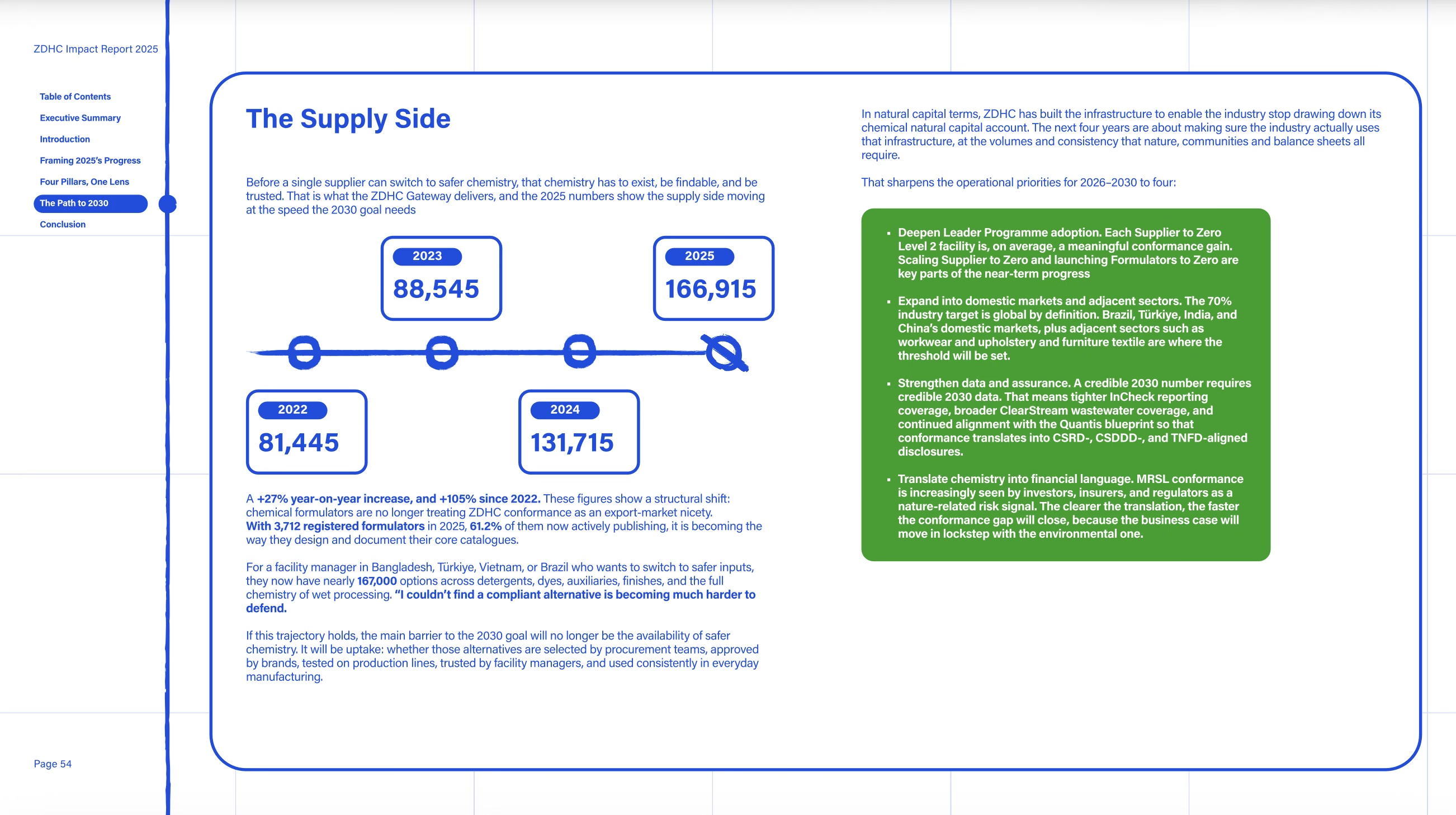
166,915
Chemical products published on the ZDHC Gateway
The number of published products has increased by 105% since 2022, significantly expanding the range of identifiable alternatives available to manufacturers.
Documenting 2025's Momentum
Dear ZDHC Community,
Welcome to the ZDHC Impact Report 2025.
The operating environment for our industry is changing fast. Supply chains have had to navigate geopolitical instability, disrupted trade flows, regional
political uncertainty, cost pressures, and shifting regulatory expectations. At the same time, artificial intelligence and digital transformation are redefining the pace at which businesses, supply chains, and operating models evolve.
Sustainability has to become part of how our industry builds resilience, manages risk, and protects long-term value. For ZDHC, this reinforces the purpose of the Roadmap to Zero Programme: to align our industry around better chemistry, stronger implementation, credible data and collective impact.
Frank Michel
Chief Executive Officer
ZDHC Foundation
Caring for the Planet
As I reflect on the past year, it's clear that ZDHC's work is a deeply personal issue for me. As a father and grandfather, I owe it to the next generation to keep pushing for systemic change in how our industry uses chemicals.
As Chief Impact Officer at ZDHC, my role is to build our capabilities for measuring the Impact of our Sustainable Chemicals Management Framework and Roadmap to Zero Programme. I have now spent 11 years as an integral part of the ZDHC team and over 25 years working to restrict and reduce the use of hazardous chemicals in the fashion industry and their potential impacts on Nature.
This Impact Report focuses on the ZDHC mission framed as reducing the risk to Natural Capital. Simply put, this is a way to assign metrics that measure the impact on resources we all need to thrive: clean air, clean water, healthy soil, and healthy ecosystems. These are embodied in our ZDHC work as our impact areas: climate, water stewardship, biodiversity, and circularity.
Scott Echols
Chief Impact Officer
ZDHC Foundation

ZDHC 2025 Impact Report: A Natural Capital Approach
As the cost of inaction exceeds the cost of change, it’s clear that sustainability has moved from a nice-to-have future ambition to a foundational part of how companies understand risk, resilience, and long-term value. And ZDHC’s own 2025 framing reflects the crucial stance that natural capital is far from an Environmental, Social, and Governance (ESG) abstraction but a measurable, reportable risk lens.
In 2025, mandatory reporting under the EU Corporate Sustainability Reporting Directive (CSRD) and ecommendations by the Taskforce on Nature-Related Financial Disclosures (TNFD) pushed businesses to account for their environmental dependencies and impacts. For financial stakeholders, nature-related risks go beyond carbon exposure or climate targets. In textile and leather supply chains, it can appear as physical risk when degraded watersheds, polluted rivers, or stressed ecosystems disrupt production; as transition risk when regulation tightens around chemicals, wastewater, traceability, product desian, or disclosure; and as liability or reputational risk when harmful substances are found in products, processes, or surrounding environments.
In practice, chemical pollution in supply chains is now, quite literally, a balance sheet issue. PFAS liabilities, stranded assets tied to non-conformant chemistry, and regulatory penalties from the EU Chemicals Strategy for Sustainability are real costs, in real time, for companies that waited for perfect data before acting.
ZDHC’s Role Within Natural Capital Protection
Natural capital is the living foundation for both economies and communities. In the textile, apparel, footwear and leather sectors, it shows up in very practical ways: the water used in dyeing and finishing, the rivers receiving treated wastewater, the soil and climate conditions behind natural fibres, the biodiversity that keeps ecosystems functioning, and the clean air surrounding factories and homes. When these systems are depleted or degraded, we feel the impact directly. Manufacturers may face less reliable or more contaminated water, communities may lose access to healthy rivers and safe local environments, and supply chains face unstable raw material quality, higher costs, or greater disruption. In financial terms, nature degradation turns shared environmental systems into operational risk. In human terms, it affects the places where people live, work, grow food, and raise families.
In “Managing nature risks: From understanding to action” (2023), PwC estimates that 55% of global GDP (around 54 trillion Euros) is moderately or highly dependent on nature. Fashion requires water- intensive manufacturing and chemical-heavy wet processing: long before a garment reaches a store, textiles are washed, bleached, dyed, printed, finished, rinsed, and treated to achieve colour, softness, durability, water resistance, wrinkle resistance, or other performance qualities. Many of these steps depend on large volumes of water and a complex mix of chemical inputs. Water is the medium that carries dyes, auxiliaries, detergents, salts, solvents, finishing gents, and residues through the production process. That is why ZDHC has always focused upstream, preventing hazardous chemistry from entering production before the harm is visible.
ZDHC helps turn natural capital protection into practical action across the value chain.
Through the ZDHC MRSL and the Sustainable Chemical Management Framework, ZDHC sets a clear direction for credible, science-based chemical management. Through the Roadmap to Zero Programme, that direction becomes actionable, helping brands, suppliers, chemical formulators and machine manufacturers control chemical risk at source. More than a restricted substances list, ZDHC rovides a shared system that enables safer chemical input selection, stronger day-to-day management, and more consistent monitoring of wastewater and air emissions. For ZDHC, prevention is the most effective, credible and cost-efficient way to protect natural capital.
The business case is clear: chemical pollution in supply chains is increasingly understood as a real business risk, linked to liability, water stress, stranded assets, regulatory pressure and reputational damage. What doesn't appear on the balance sheet today can still return later as a crisis. The MRSL serves as a risk firewall, helping prevent downstream liability. That is also why ZDHC's aim is evolving from voluntary sustainability to resilience, readiness, and system design.


Measurement Problem in the Sustainability Market
ESG labels, Sustainable Finance Disclosure Regulation (SFDR) classifications, and natural capital approaches can influence perceptions and capital flows without necessarily changing what happens inside factories, chemical inventories, or wastewater systems. ZDHC warns against confusing financial classification with real-world environmental improvement — this distinction is essential. ZDHC can use nature capital as a useful translation tool for investors, boards and regulators, but it should not treat it as the definition of success. Success must be defined by physical and observable improvement: hazardous substances removed, pollution reduced, water better protected, ecosystems under less pressure, and workers and communities exposed to less harm.
That is also why the Quantis assessment matters. In 2025, the ZDHC-Quantis report found that proactive upstream chemical management through the ZDHC MRSL, Wastewater Guidelines, and Air Emissions Guidelines can substantially reduce nature-related impacts in case-based and modelled scenarios. Reported reductions include up to 95 percent in human toxicity, up to 86 percent in freshwater ecotoxicity in wastewater conformance scenarios, and up to 96 percent across selected nature-related indicators, depending on the case.
A precautionary note is called for: these are case-specific results, not industry-wide averages, and should not be used as blanket claims without location-specific, verified data. That guardrail is part of what makes the ZDHC approach more credible for financial stakeholders, regulators, brands, and civil society: supporting sustainable chemical management and measurable risk reduction while staying honest about what the evidence can and cannot prove.
ZDHC does not need to claim that it restores nature on its own, and it should not rely on vague market language to prove relevance. Its strength is different. ZDHC offers a science-based, hazard-focused, industry-tested system that turns sustainable chemical management into something practical, scalable, and increasingly decision-useful for brands, suppliers, regulators, and financial stakeholders. In that sense, ZDHC’s role is evolving from standard-setter to systems architect: connecting chemical requirements, implementation tools, data and evidence into an approach that helps the industry reduce risk while protecting life, land, air and water.
The natural capital framework helps industries to see how chemical choices shape environmental risk, operational resilience and long-term value.If fashion wants credible progress on water, biodiversity, climate, circularity, and health, it has to start with what enters the process. Better chemistry is the foundation.
This report presents progress, evidence and direction. However, it does not treat modelled results as universal claims. The Quantis study itself states that its figures are based on specific case studies and scenarios, and that public claims should be grounded in critically verified, facility-level, and location-specific data.
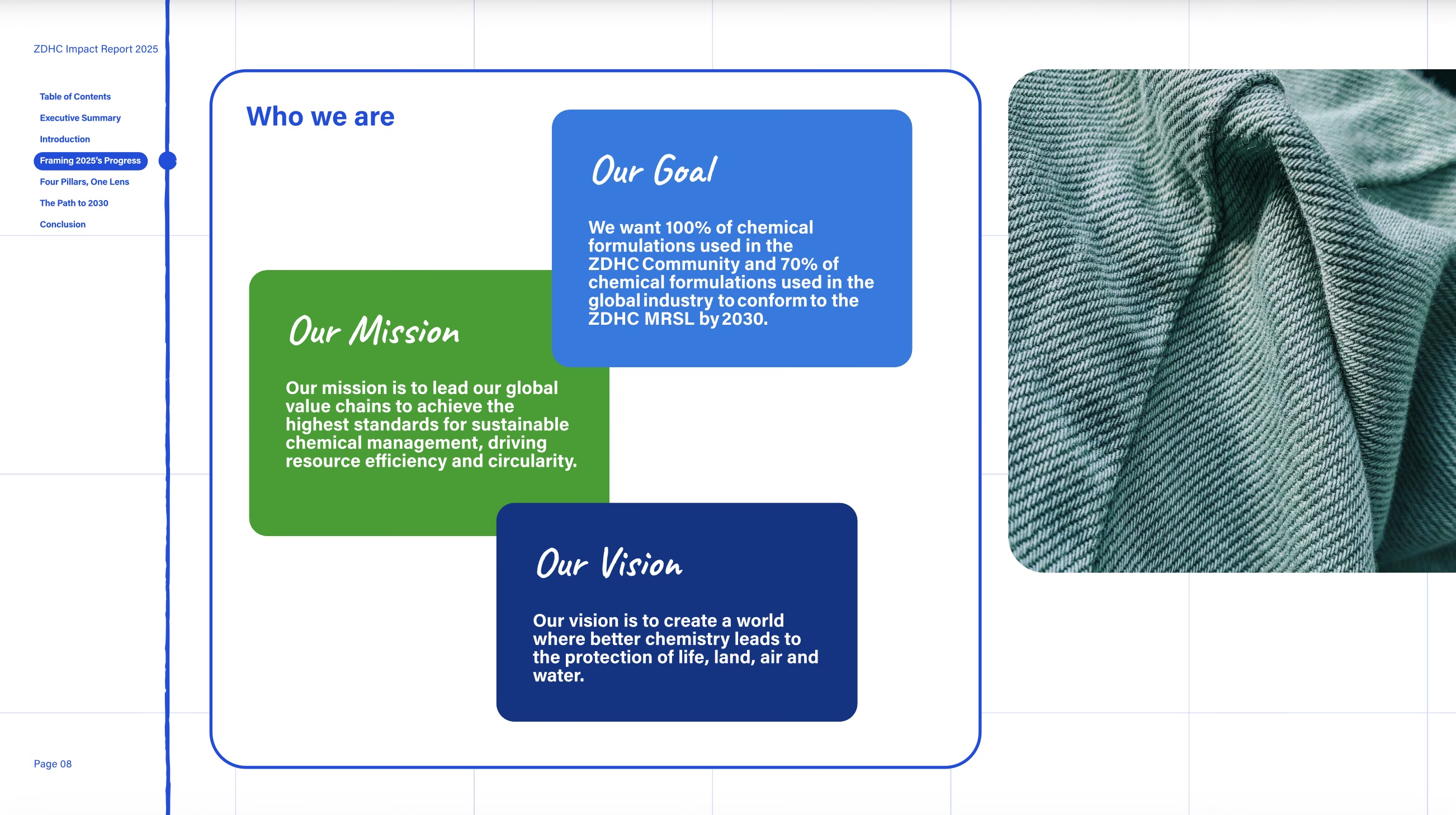
Who we are
We want 100% of chemical formulations used in the ZDHC Community and 70% of chemical formulations used in the global industry to conform to the ZDHC MRSL by 2030.
Our mission is to lead our global value chains to achieve the highest standards for sustainable chemical management, driving resource efficiency and circularity.
Our vision is to create a world where better chemistry leads to the protection of life, land, air and water.
2025 At-a-Glance
By the close of 2025, the ZDHC community had grown not just in numbers, but in reach and ambition. Perhaps most tellingly, 2025 marked the moment the ZDHC community stepped beyond fashion altogether, welcoming its first signatory from outside the textile sector.
That shift is not a footnote - it's a signal of where chemical management standards are heading next.
Signatory Numbers
Staff Numbers
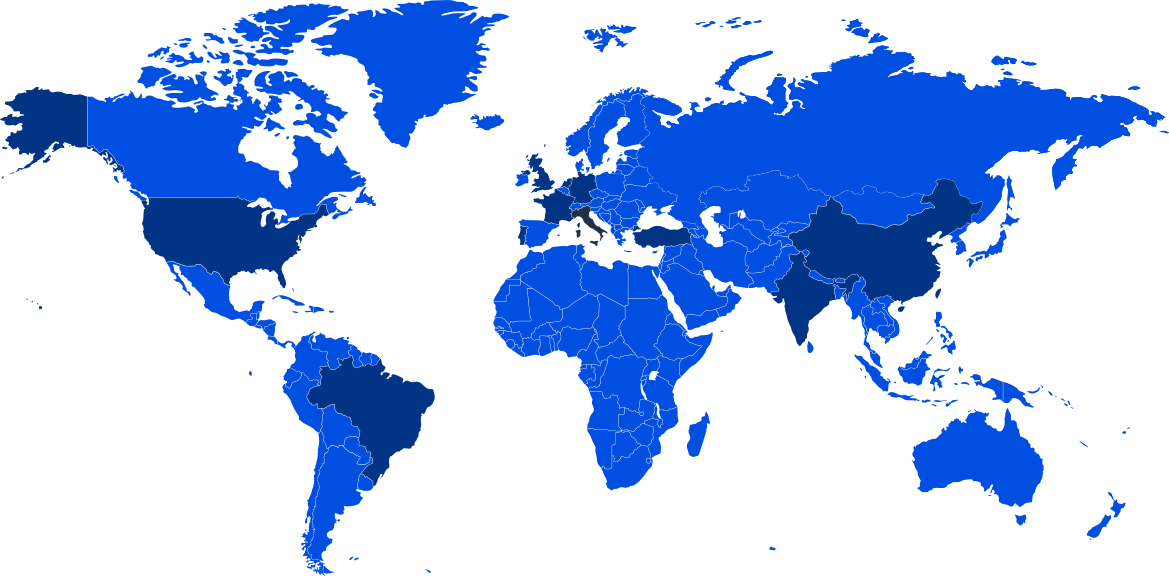
ZDHC Locations Map

In the 2025 report, ZDHC's impact stories and year-on-year data are structured by Four Pillars of Impact. Together, they connect operational practice to natural capital and show how changes inside facilities, across supply chains, and in the wider social context can shape environmental, social, and economic outcomes.
Across all four pillars, the report moves from activity to evidence, from evidence to risk reduction, and from risk reduction to real-world resilience. The aim is to show that progress is possible when sustainability is made an integral part of textile production. ZDHC's work begins with chemistry, but its relevance extends to helping the industry build the practical infrastructure needed to protect natural capital, strengthening confidence, and supporting safer outcomes for people and ecosystems.
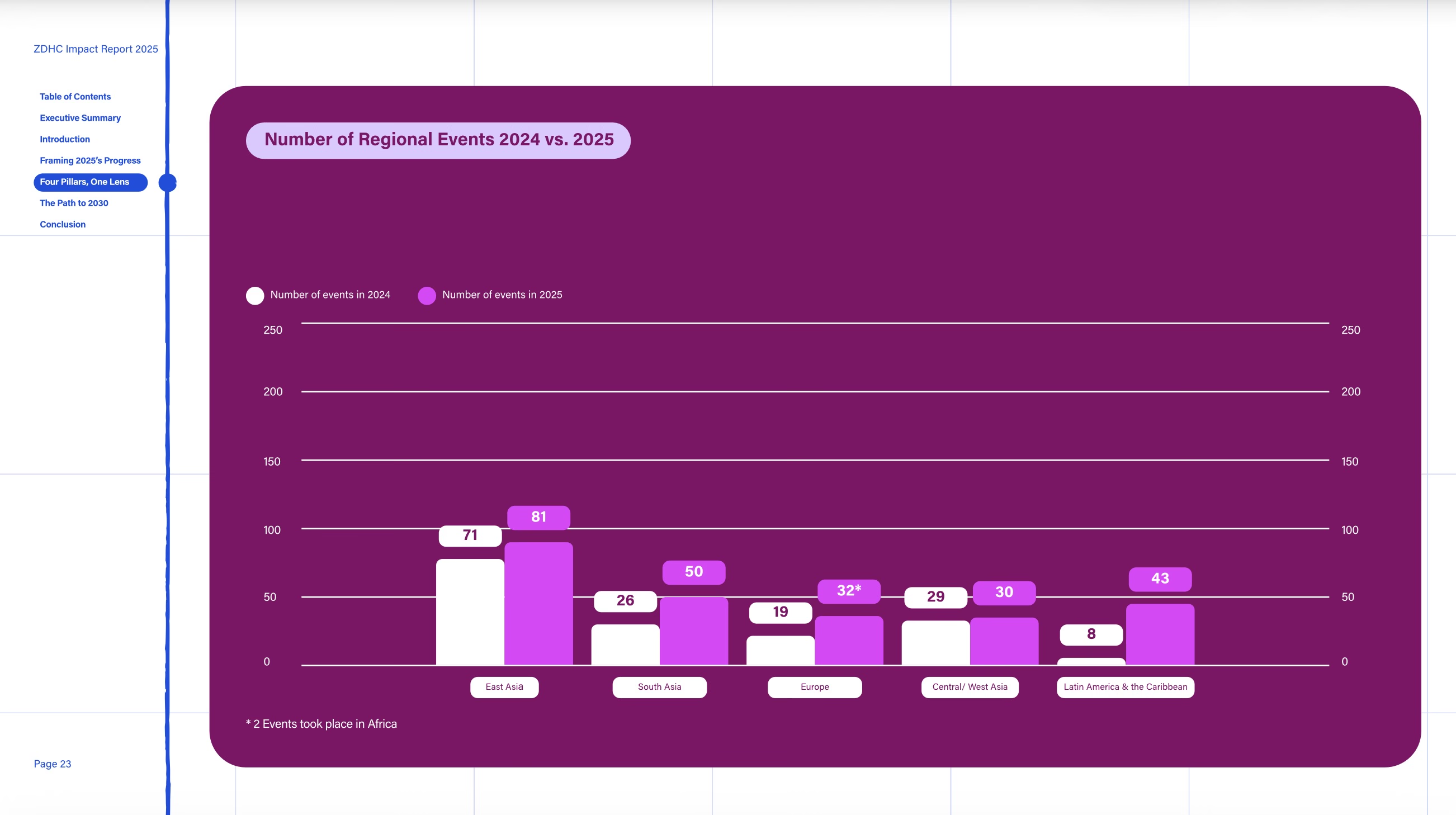
This pillar looks at how participation in the Roadmap to Zero is expanding. It follows the progression of the programme across regions, trainings, events, signatories, friends, external users, and Academy participation.
This pillar examines how ZDHC is helping shift the industry’s operating system. It also examines how sustainable chemical management is becoming part of resilience planning, particularly regarding PFAS exposure and water stress, and how these can be linked to risk assessment, insurance, and investment decisions.
This pillar focuses on ecosystems. It traces the pathway from chemical inputs to environmental outcomes, showing how better control at the source can help reduce pressure on water systems, air quality, soil health, and biodiversity.
This pillar explores the human dimension of natural capital. It examines health and safety programmes, gender-specific chemical risks, and human health insights.

Impact story
A Shared Roadmap for Better Chemistry
How suppliers are turning safer chemistry into trust, leadership, and resilience
Joining ZDHC means more than just being the new member of a club. It means more than just committing to goals. It means entering a framework that asks suppliers and brands to look upstream, requiring new habits and clearer data processing across purchasing, storage, formulation, process control, wastewater management, training, and accountability. For suppliers worldwide, the Roadmap to Zero has been the starting point of a common journey to phase out hazardous chemicals from the textile, apparel, leather, and footwear value chains. These stories examine what it took to get started, why they chose ZDHC as their primary sustainable chemical management framework, and why they remain motivated to do the work.
’’Chemical management was something that we needed to work on because we had a very complex set of requirements coming from customers’’

Sugath Disanayake
Sustainability Manager at MAS Holdings
Sri Lanka
“This is not one man or one team’s work. We need to involve the full organisation.”

Andy Li
Head of Environment and Compliance at COATS
China
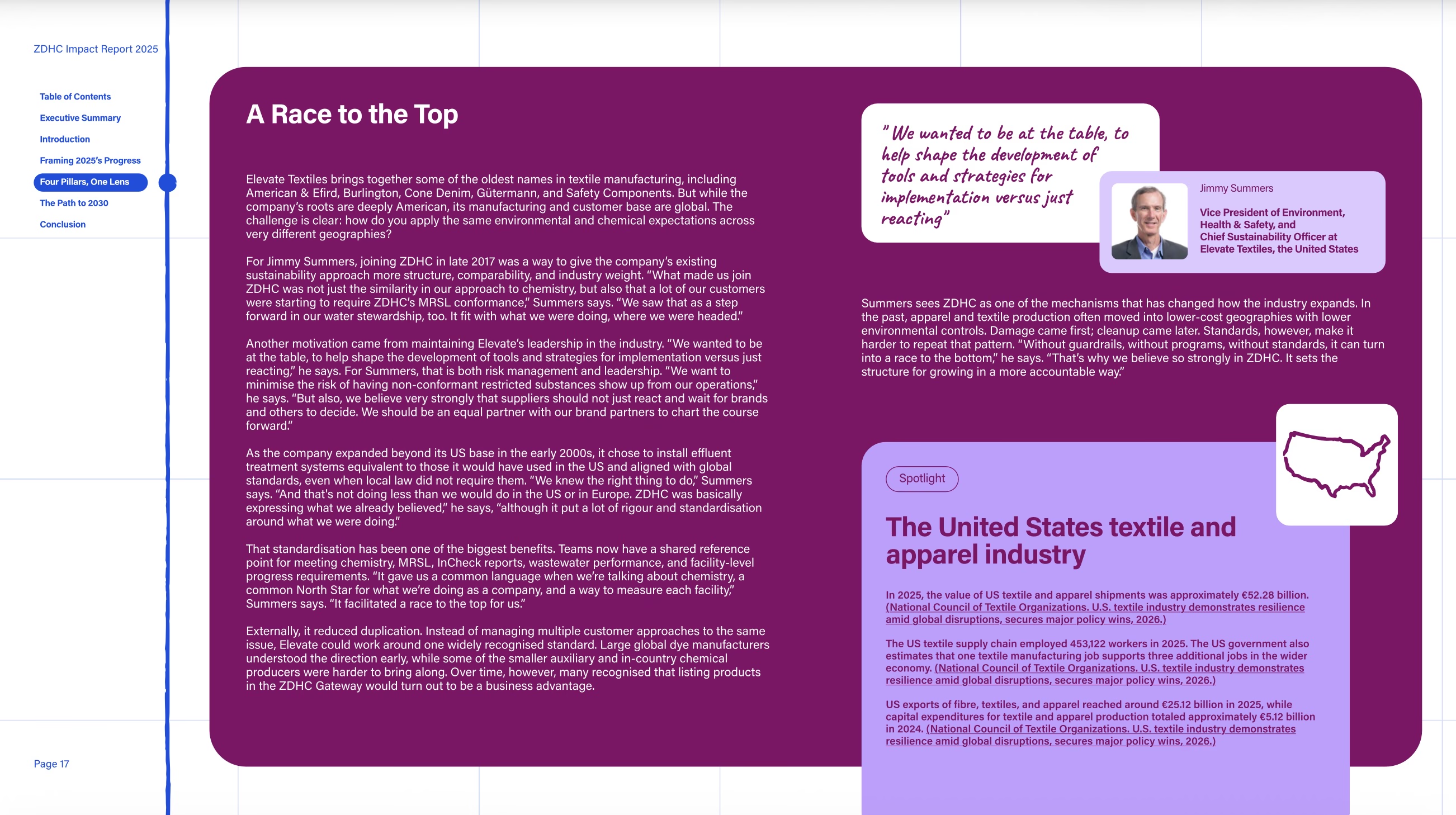
" We wanted to be at the table, to help shape the development of tools and strategies for implementation versus just reacting"

Jimmy Summers
Vice President of Environment, Health & Safety, and Chief Sustainability Officer at Elevate Textiles
United States
Understanding ZDHC's Impact Model
61% of Signatory Brands participated
47.5% of Approved Solution Providers participated
2693
ZDHC Academy certificates issued
280
Trainings conducted
31
Approved Training Providers
61%
Of Signatory Brands participated
47.5%
Of Approved Solution Providers participated
2693
ZDHC Academemy certificates issued
280
Trainings conducted
31
Approved Training Providers
61%
Of Signatory Brands participated
47.5%
Of Approved Solution Providers participated
Impact story
A Joint Effort for More Sustainable Textile Manufacturing in SouthAfrica
How ZDHC teamed up with governmental and corporate partners to innovate the industry’s chemicals management
In South Africa, sustainable chemical management is gaining importance, thanks to the Clothing & Textiles Circular Economy Project. The project activities in the country are part of a wider Southern Africa initiative covering South Africa, Lesotho, Madagascar, and Ethiopia, funded by the Global Environment Facility (GEF) and implemented nationally by the National Cleaner Production Centre South Africa (NCPC-SA) in partnership with the United Nations Industrial Development Organization (UNIDO).
The project responds to a set of shared challenges across the region: weak enabling environments, limited technical knowledge and capacity, and insufficient coordination between local and global sustainability initiatives. UNIDO works with governments and industry to support inclusive and sustainable industrial development. In the Clothing & Textiles Circular Economy Project, it supports the broader regional framework linking circular economy, chemicals, and waste management, and its implementation across the textile and garment sector. In South Africa, these challenges are both commercial and operational, as manufacturers work to improve environmental performance while competing in a challenging market.
For ZDHC, the project opened a door into a region where sustainable chemical management was still unfamiliar to many stakeholders. “A lot of people didn’t know about ZDHC, or had limited knowledge about sustainable chemical management,” says Claudia Haverman, Projects & Partnerships Manager at ZDHC. “Now people really start to see the importance of managing chemicals.”
It does no harm first, as opposed to trying to fix the harm. That really appeals to me about the programme.

Claudia Haverman
Projects & Partnerships Manager at ZDHC

Impact story
Decathlon: Systemic Change at the Source
How Decathlon istaking ZDHC chemical management beyond traditional textile manufacturing
French sporting goods retailer and manufacturer Decathlon designs products for more than 80 sports. With footwear, bicycles, kayaks, fitness equipment, and other products made from leather, plastics, rubber, foams, metals, and textiles, its supply chain is complex as well as diverse. Since becoming a ZDHC Signatory in January 2022, Roadmap to Zero Programme has been part of Decathlon's global quality and sustainability framework, implemented across this multifaceted manufacturing context.
Here, Maxence Dubus, Project Leader for Decathlon’s ZDHC Project Team, and Devika Perera, Project Leader for its Environmental Compliance Team, explain how a framework developed within the textile industry is applied to hardware, sports equipment, and multi-material manufacturing.
The relevance beyond textiles can be seen particularly clearly in inflatable sports equipment. Decathlon has phased out toluene from the glues used to manufacture its inflatable kayaks and paddleboards. It shows how a chemical management approach developed within textiles can inform decisions in a very different product category.

Devika Perera
Project Manager Sustainable Development
Decathlon

Average MRSLconformance
The series shows a sustained rise in the average share of chemical products recorded in eligible InCheck reports that conform to the ZDHC MRSL. The calculation uses the final Performance InCheck Report submitted by each supplier in a given month and gives each eligible report equal weight.
Impact story
Brands, Scientists, and Certificates Working Together for River Health
How a partnership between Primark and Oxford Molecular Bio sensors supports better basin-level water outcomes in Bangladesh
Primark is an international fashion retailer and one of the world's most widely recognised high street brands. With more than 480 stores across 19 countries in Europe, the US and the Middle East, and over 80,000 colleagues, Primark serves millions of customers each year. Many of its products are manufactured in Bangladesh, one of the world's most important textile and garment sourcing countries.
But when it comes to addressing environmental consequences caused by the garment industry in general, or matters of river health more specifically, even a global player like Primark is powerless when acting alone. "Just getting our own house in order isn't enough, and broader influence is needed to drive that basin-level outcome," says Lewys Isaac, Primark's Water Stewardship Manager. "Only if we look at it as a shared resource are we going to be able to drive more sustainable outcomes."
What Isaac refers to are growing concerns about worsening levels of water pollution and extraction in the districts where textile dye and production sites are concentrated (an estimated 500–700 factories release synthetic dyes and heavy metals into waterways surrounding Dhaka, Narayanganj, and Gazipur). A 2025 studyon water vulnerability in the region identifies the Shitalakhya, Turag-Tongi Khal, Buriganga, and Balu rivers as highly polluted, with dissolved oxygen hitting alarming low levels.
Moreover, the basin receiving wastewater is also part of the system that sustains workers, communities, and ecosystems. River health, industrial resilience, and community wellbeing cannot be treated separately; they are closely interlinked.
What became increasingly clear to Isaac and his colleagues was that in order to reduce these effects, they needed to better understand them. And factory reports alone would not help Primark comprehend how to prevent pollution in a basin as complex as Dhaka's.
When you’ve got a model that combines the hydrology with the water chemistry with the ecology, you’ve got a very powerful combination tool.

Professor Paul Whitehead
Chairman and Chief Modeller of Oxford Molecular Biosensors Ltd (OMB)
For true change, you need to have a really collaborative multi-industry partnership. The textile industry in Bangladesh is so large. One can make a substantial difference just by collaborating within that.

Dr. Cordelia Rampley
CEO at Oxford Molecular Biosensors Ltd (OMB)

ZDHC's Wastewater Performance Snapshot
Non-conformance forthese five key indicators was generally in the region of 1–2%
2,359
Individual direct-discharge wastewater test reports included from the April and October 2025 testing cycles
97%+
Conformance for all listed conventional parameters except E. coli
99%
Conformance for conventional parameters outside the 11 most frequently detected parameters
75%+
Of reports achieved Progressive or Aspirational performance for key indicators including BOD, COD, nitrogen, phosphorus and suspended solids
Impact story
Chemical Risk Is Financial Risk
How a partnership between Primark and Oxford Molecular Biosensors supports better basin-level water outcomes in Bangladesh
Often, chemical management is a technical task on the to-do list of sustainability teams, compliance officers, chemical experts, and facility managers. It can seem far removed from financial strategy, but as nature-related financial disclosure comes under the scrutiny of mainstream investors, that gap is closing.
While companies need credible evidence of their risk-prevention efforts, investors and lenders need evidence to understand where they are exposed to risk. Between them, a common language is forming: nature risk is financial risk.
The financial penalties are real now, from regulatory fines, or litigation exposure, contract loss or higher insurance premiums; meaning externalising environmental costs is no longer a way to drive revenues, which is good, since it never was a viable or sustainable business strategy.

Lauren Zahringer
Market Engagement & Stakeholder Development at ZDHC

PwC’s study on potential consequences of degrading ecosystems in Australia, Canada, New Zealand, and Singapore, “Unearthing the nature risk in financial portfolios” (2026), suggests that unchecked nature loss could erode 12–17% of GDP and 12–18% of stock-exchange market value, roughly €9.5 trillion, within 15 years.
Impact story
Gender, Chemicals, and Justice
The gender lens: making chemistry more just, inclusive, and protective
So far, this report has framed ZDHC's work in terms of its contribution to protecting natural capital: reducing pressure on ecosystems by keeping hazardous substances out of production. However, safer chemistry is also defined by its ability to protect people, most of all those directly exposed to chemical risks.
While this applies to both men and women, the effects on the human body depend on biological differences, labour patterns, cultural norms, workplace design, protective equipment, and access to information. Given the significantly above-average proportion of female workers in the textile value chain, analysing chemical risk and exposure with a gender lens is fundamental.
Women represent nearly 60% of the global garment workforce, rising to nearly 80% in some regions, according to the International Labour Organization. Some work in factories, others from home, in subcontracted spaces, or in informal workshops. Their labour is essential, but not always protected.

In 2025, ZDHC became an official board member of the Gender and Chemicals Partnership (G&CP). Mariella Noto, ZDHC's Academia and Multilateral Partnerships Director, together with Sinem Akkocaoğlu, Gender Focal Point at ZDHC, lead the organisation's engagement. The G&CP brings a more structured approach to the gender and chemicals discussion, helping connect ZDHC's work on safer chemical management with broader efforts for a gender-responsive chemicals and waste management.
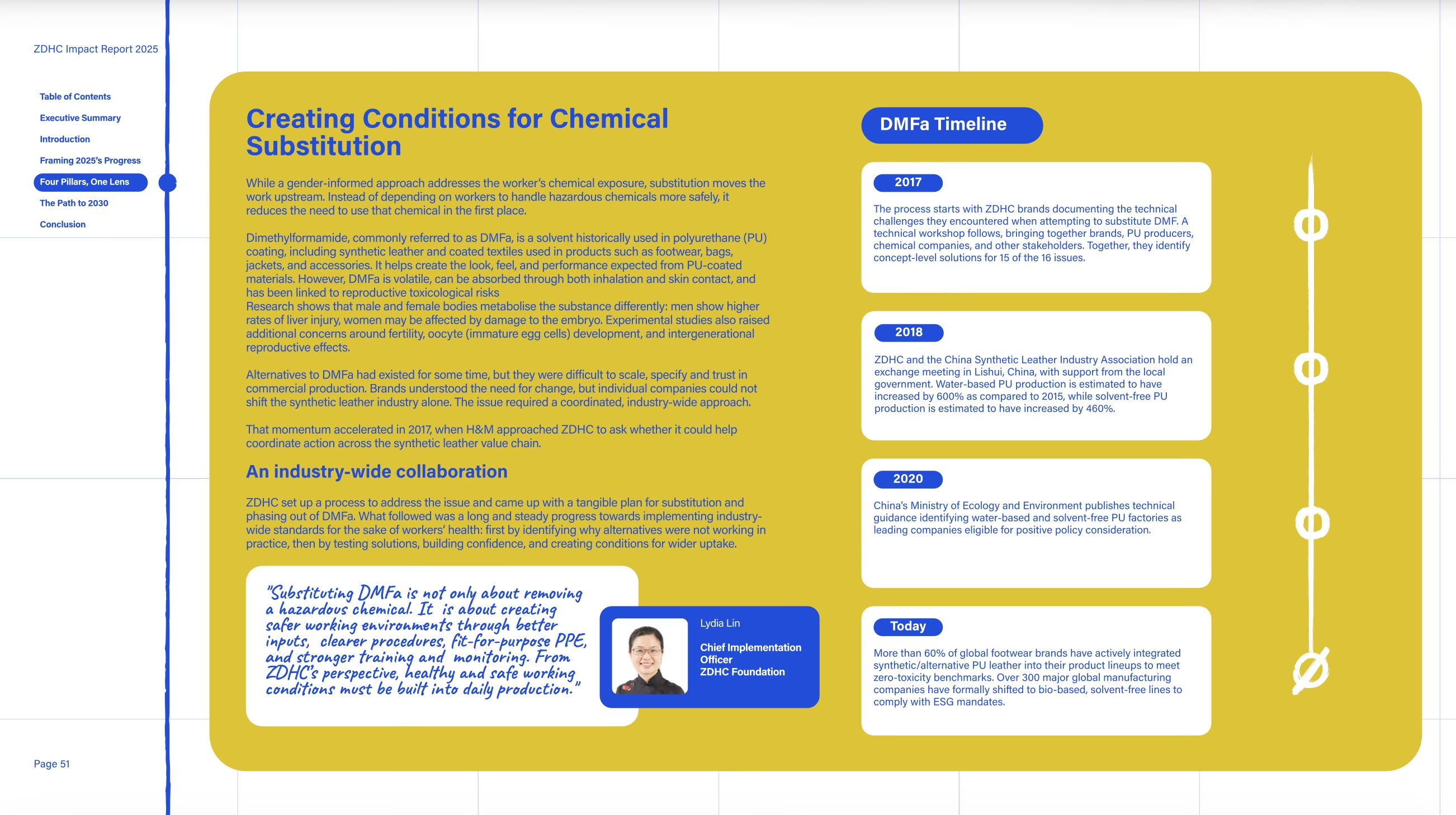
Dimethylformamide, commonly referred to as DMFa, is a solvent historically used in polyurethane (PU) coating, including synthetic leather and coated textiles used in products such as footwear, bags, jackets, and accessories. It helps create the look, feel, and performance expected from PU-coated materials. However, DMFa is volatile, can be absorbed through both inhalation and skin contact, and has been linked to reproductive toxicological risks.

Brands to Zero
Brands play a pivotal role in transforming how our industry implements sustainable chemical management. The heart of this effort is the ZDHC MRSL and further guidelines, which form the Brand Roadmap to Zero. But the guidelines alone are not enough. The real impact comes when brands actively implement the principles of Sustainable Chemical Management across their supply chains and follow the joint Brand Roadmap to Zero. Each brand amplifies the words and actions of the others to create impact. The Brands to Zero (BtZ) annual assessment provides clear milestones for this joint roadmap and holds Signatory Brands accountable for joint implementation. It helps brands turn sustainability commitments into real-world due diligence results - tracking progress, identifying gaps and building trust through transparency. We call this action that creates impact.
The Brands to Zero assessment focuses on the brands effort and impact on two levels:
Corporate Level
Brand's performance with regard to relevant commitments made, setting them into practices and supply chain engagement. Based on the OECD Guidance, goals and strategies set, implementation plans, enabled staff and responsible business practice or decision-making are evaluated here, as well as standard operating procedures.
Supply Chain Level
Brands' general approach to each of the ZDHC's guidelines, platforms and solutions, brands' adoption practices and how they monitor the implementation scale of ZDHC in their supply chain. Furthermore, this segment evaluates the follow-up and corrective action practices that brands have in place if the suppliers do not meet the expectations and the level of supply chain engagement achieved.
Brands to Zero Assessment Champion Level 2025
First year Champions

















A Collective Call to Action
The four priorities above are not ZDHC's to deliver alone. ZDHC is not a regulator, a certifier, or a brand: we are the shared infrastructure for sustainable chemical management. The 2030 goal is what the system could deliver if every stakeholder uses that infrastructure for what it was built to do.
Peer organisations across our sector are reaching the same conclusion this year: incremental, voluntary, awareness-led progress is no longer sufficient on its own to meet 2030 environmental commitments. We share that view. The difference is that ZDHC's ask is specific, evidence-anchored, and tied to indicators already on the page. Here is what each part of our community can do in 2026 with the tools and data already at their disposal.
Action Steps for Our Signatory Brands
You are the reason our brand-led organisation exists. The 2025 data shows that the largest available lever in the system is not new guidelines; it is the consistency with which existing ones are cascaded across your supply chain.
- Make ZDHC MRSL conformance your default sourcing requirement, not a sustainability preference. Every brand that treats the MRSL as a baseline rather than an aspiration moves us measurably closer to the 70% industry threshold.
- Use Brands to Zero to guide you and make your achievements visible. The assessment is built so progress can be compared, assessed and improved year over year. Hidden progress does not move markets.
- Incentivise and support supplier progression up the Supplier to Zero pathway. The jump from 235 to 329 Level 2 facilities in a single year was due to specific brands deciding to. The next jump will happen the same way.
- Treat InCheck and ClearStream reporting as a due diligence asset for CSRD, CSDDD, and TNFD purposes, not as a compliance chore. The data you already collect through ZDHC can carry weight in your statutory disclosures.
- Use the supplier platform as your smart sourcing tool.
Action Steps for Our Suppliers And Manufacturers
You are the stakeholder group in the system whose decisions most directly determine whether 2030 is met. The 2025 numbers, particularly the growth in Level 2 certifications and wastewater with at least one parameter on alert, dropped to almost half in two years (8% in Oct ‘23 to 4.2% in Oct ‘25), showing what is possible when facilities decide to lead rather than wait.
- Move up the Supplier to Zero pathway. Level 1 is a foundation, not a destination. Level 2 facilities are also the most resilient to regulatory tightening. Embrace Supplier to Zero V2 and aim at the top. Publish your InCheck data. Only 13.4% of registered suppliers were reporting fully in 2025. Closing that gap is the fastest way to ensure the global conformance number reflects the reality on your factory floor.
- Use the Gateway as a procurement tool, not a reference library. The substitution conversation has shifted from "Is there an alternative?" to "Have we chosen the best one available?"
- Ask brands for the support you need. The Roadmap to Zero is designed to be co-funded and co-implemented. ZDHC's regional hubs in East Asia, South Asia, Southern Europe, Latin America, and Türkiye are there to help you make that ask.
Action Steps for Our Chemical Formulators
You are the supply side of the 2030 equation, and the 2025 numbers tell the most optimistic story in this report: 3,712 registered formulators, 2,270 actively publishing products, 61.2%, the highest share in our history.
- Keep publishing. Every additional conformant product on the Gateway lowers the cost and friction of substitution for someone, somewhere, in the supply chain.
- Move with Chemicals to Zero as it scales. Conformance is the floor; product stewardship, transparent sourcing, and substance-level disclosure are where credible market leadership will be built.
- Close the data gaps. Quantis flagged formulation data and substance-level data as the biggest gaps holding back nature-related impact measurement for chemistry. Trusted, confidential pathways to share more of that data, without compromising IP, are the next frontier.
Action Steps for Policymakers And Regulators
The 2025 reporting landscape, CSRD, CSDDD, ESPR, the EU Textiles Strategy, the global plastics treaty, and expanding PFAS restrictions are moving toward what ZDHC has been building for a decade: upstream, input-based, evidence-driven chemical management.
- Recognise the ZDHC MRSL and the Roadmap to Zero as the science-based, multi-stakeholder infrastructure they have become. Build on them rather than around them. Duplication slows progress; alignment accelerates it.
- Use Gateway and InCheck data as a reference point for chemical disclosure expectations. The data exists, is verifiable, and covers the most chemical-intensive stage of textile production.
- Support domestic-market adoption. The 70% industry conformance goal will be won or lost in the domestic textile economies of India, China, Brazil, Türkiye, Bangladesh, Vietnam, and Pakistan. Policy frameworks that recognise ZDHC participation as evidence of due diligence will move those markets fastest.
Action Steps for Investors, Insurers, and Lenders
Over 620 organisations representing more than €17 trillion in assets under management have voluntarily committed to nature-related disclosures. The chemical dimension of nature risk, long the hardest to quantify, is now measurable through MRSL conformance, wastewater performance and Gateway adoption.
- Read MRSL conformance InCheck and ClearStream reporting as indicators of nature-related risks. Chemical pollution is one of the least quantified drivers of nature loss, and ZDHC's datasets are among the few that translate it into something a credit committee or underwriter can use.
- Finance the transition, not just the risk. Higher-impact, capital-intensive upgrades, wastewater treatment, safer-chemistry substitution at the formulator level, and regional leader programme scale-up are exactly the kind of bankable projects that close the gap between availability and use.
- Engage with us on the natural capital pilots that will run between now and 2030, built on the Quantis blueprint. Early engagement from the finance community is what makes those pilots globally usable disclosure tools.
Action Steps for Adjacent Sectors
Protecting the environment requires action far beyond any single organisation, sector or initiative. Lasting progress depends on active collaboration between industry, governments, academia, civil society and science, across the systems that affect our rivers, soils and ecosystems. ZDHC's impact should therefore be understood not only through the actions we directly influence, but also through the collective progress.
- Use the MRSL Framework as a starting point, not a finished product, for your sector. The methodology, the Gateway architecture, and the Leader Programme model are open to adaptation.
- Engage with ZDHC's emerging cross-sector dialogues. The wet-processing chemistry that drives most of our impact also runs through adjacent sectors. The same MRSL logic applies.
Action Steps for Civil Society, Researchers, and the Public
In 2025, suppliers in the ZDHC committed community reached an average MRSL conformance of 78.93 per cent in Performance InCheck. This figure matters because it shows how far actual use has progressed toward the chemistry already available in the ZDHC Gateway.
- Use this data, question it, and build on it, because better questions from outside ZDHC lead to a better ZDHC.
- Bring Performance InCheck and ZDHC Gateway data into your own research, campaigns, and due diligence so that debates about “sustainable chemistry” are grounded in concrete evidence, not abstract claims

Our Commitment to Transparency
- We will publish the gap between Gateway availability and supplier-reported use every year. And we will address the strategies to close it.
- We will scale what works. Over the next four years, our operational focus will be on the Supplier to Zero Version 2, Chemical to Zero Progressive and Aspirational and the development of sector-specific Roadmap to Zero. We will translate chemistry into the languages our stakeholders use. That includes financial risk, regulatory compliance, nature-related disclosure, human health, and worker safety, so that the business case for MRSL conformance is impossible to misread.
- We will keep being a community, not a bureaucracy. The Roadmap to Zero only works because brands, suppliers, formulators, scientists, regulators, and civil society show up to walk it together. We will keep convening that table.
The 2030 Goal Is Reachable
In 2015, ZDHC was founded on a question: what if we stopped trying to clean up pollution after it happened, and started preventing it instead? Ten years later, the answer is in your hands: eight datasets, four pillars, one shared goal.
The chemistry of the textile, apparel, leather, and footwear industry is no longer a black box. The infrastructure to manage it exists, the data to measure it is published, the community to scale it is growing, and the financial logic to fund it is catching up.






%201.avif)


.avif)