By using this website, you agree to the storing of cookies on your device to enhance site navigation, analyze site usage, and assist in our marketing efforts. View our Privacy Policy for more information.
A core component of environmental stewardship - Maria Arroyo, Sector Partnership Lead, ZDHC
A core component of environmental stewardship, particularly in managing industrial discharge to soil and wastewater systems.
This is a systemic challenge, one ZDHC has been addressing not through isolated actions, but through science-backed research, collaboration and practical implementation across the value chain.
What is becoming increasingly clear is this: microfibre release will not be solved by one actor alone. It demands alignment between research and innovation, and coordinated action to establish harmonised industry frameworks with credible pathways to reduction.
Our collaboration with The Microfibre Consortium (TMC) anchors this work in science and facility-level research. Since formalising our partnership in 2021, ZDHC has combined its expertise in sustainable chemical management and wastewater governance with TMC’s deep understanding of the root causes and mechanisms of fibre fragmentation.
Together, we are translating technical insight into operational guidance, with particular focus on tier 2 facilities, where fibre release into wastewater systems is most acute.
Now in the second phase of our joint work, we are exploring the relevance of Total Suspended Solids (TSS) as a proxy indicator for fibre fragmentation with the support of a large number of brands and suppliers. The objective is practical: to equip facilities with an accessible, cost-effective way to monitor and reduce fibre discharge using practices already embedded within supply chains.
Because measurable progress requires measurable and democratic indicators.
The pathway to reduction, however, is not uniform. It varies according to material composition, process configuration and wastewater treatment infrastructure. For some, improvement may come through strengthened TSS monitoring and progression from Foundational to Progressive or Aspirational performance levels. For others, it may require optimisation of effluent treatment operations or investment in advanced filtration technologies.
Innovation is part of that journey.
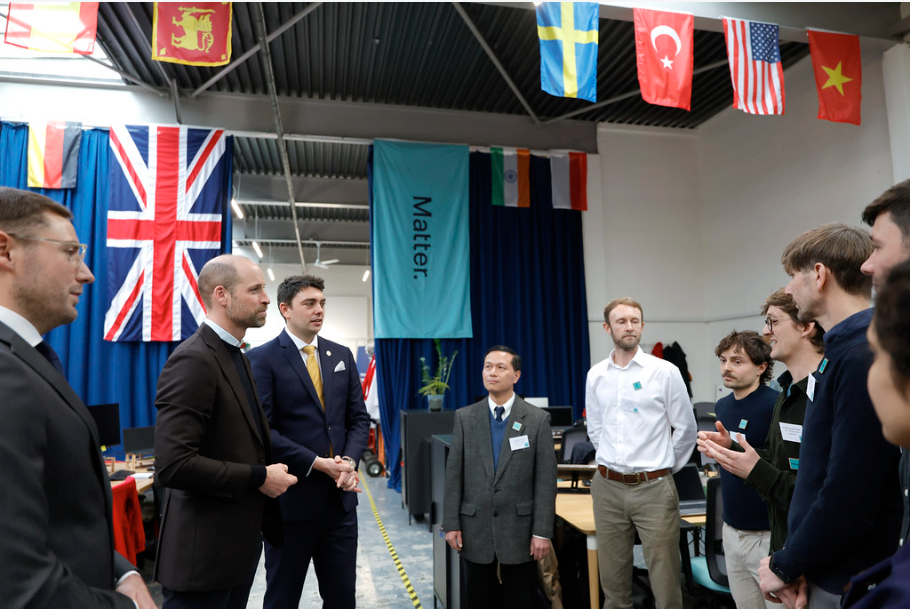
One of these innovators in the ecosystem is Matter. A UK-based cleantech company pioneering innovative filtration technology that captures and recycles microplastics and microfibres from water across home, industrial and supply-chain systems, helping reduce pollution, cut emissions and support sustainable operations.
Partnerships Lead at ZDHC, MariaArroyo joined Calvin Woolley (IKEA) in conversation with The Household of TRH The Prince and Princess of Wales to discuss the importance of harmonised industry standards to ensure all actors in the value chain have a clear guidance to mitigate the issue of fibre fragmentation.
Matter’s Regen® filtration system, designed to capture microplastic fibres at the point of release in both household laundry and industrial manufacturing, demonstrates the power of targeted solutions. Innovation has a critical role to play. Yet its impact multiplies when embedded within harmonised frameworks and shared metrics.
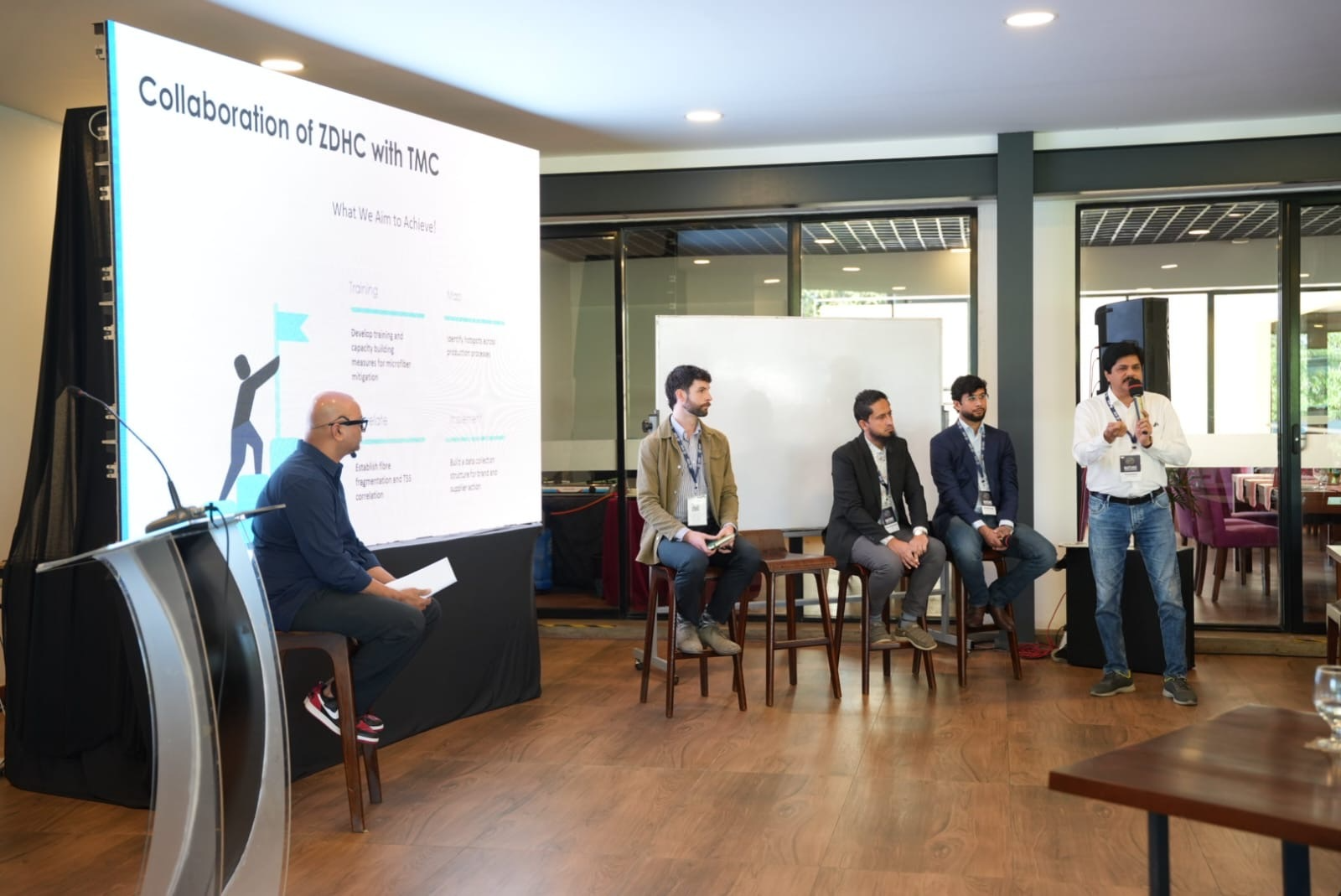
Similarly, at the Nature Summit hosted by Nike at MAS Athena campus near Colombo, Sri Lanka, Prasad Pant (ZDHC) joined Saurabh Singh (Bluetech Research), Patrick Jurney (The Nature Conservancy) and Saquib Sohail (TMC), moderated by Vetri Dhagumudi (Nike), to address microfibre shedding and Positive Water Impact.
What stood out was not only ambition, but operational realism, factory visits, case studies and candid dialogue across shared suppliers. Manufacturers are already adapting processes to reduce fibre fragment release. Emerging sludge management approaches are being tested to prevent environmental leakage.
The Nature workshop was indeed a valuable initiative by Nike to bring together stakeholders to discuss how to power actions and foster constructive collaboration to resolve the multi-dimensional issue of microfibres. It was very clear from the interactions that before setting reduction targets, there should be more integrated studies and data collection on fabric construction and process-related fibre shedding. Just pushing filtration technologies for reducing microfibres in wastewater discharge is not the only solution!
- Prasad Pant
The message is clear: collaboration is no longer optional; it is foundational.
Microfibres do not respect brand boundaries. They move through shared waterways and shared ecosystems. Which means solutions cannot remain isolated.
Across our partnership with TMC, our engagement with innovators such as Matter, and our participation in industry convenings like Nike’s workshop, one conclusion emerges: the industry is ready to move beyond awareness.
What it needs now is coherence, embedding fibre fragmentation science into our Wastewater and Sludge Guidelines, validating practical monitoring tools, delivering capability-building through the ZDHC Academy, and aligning frameworks that scale across supply chains.
Leadership in this moment is not about visibility. It is about integration.
And integration is how systemic change becomes possible.