By using this website, you agree to the storing of cookies on your device to enhance site navigation, analyze site usage, and assist in our marketing efforts. View our Privacy Policy for more information.
ZDHC Roadmap to Zero Programme – Brands Roadmap to Zero
April 23, 2026
Brands Roadmap to Zero is now live!
The ZDHC Foundation has launched the Brands Roadmap to Zero (RtZ) as part of the Roadmap to Zero Programme framework, providing structured guidance to support brands in implementing sustainable chemical management.
The Brands RtZ is the second stakeholder framework to transition into a digital guidance format, following the Suppliers Roadmap to Zero.
Part of the RtZ Programme Framework
The Roadmap to Zero Programme provides a shared framework to support the implementation of sustainable chemical management across the value chain. Within this framework, stakeholder-specific roadmaps define how different actors contribute to programme implementation.
The Brands RtZ defines the brand-specific implementation journey, focusing on how brands translate programme requirements into policies, strategies and supply chain engagement.
Together with the Suppliers Roadmap to Zero, the Brands RtZ forms part of a growing set of stakeholder frameworks. Additional frameworks, including the Solution Provider Toolkit and the Formulators Roadmap to Zero, are planned for release later this year.
Together, these roadmaps:
translate ZDHC guidelines into actionable steps for each stakeholder group
support implementation across the value chain
enable alignment and consistency between stakeholders
This ensures that all stakeholders are working towards the same goals, while recognising their different roles and responsibilities.
Why the Brands Roadmap to Zero
The Roadmap to Zero Programme is driven by brands setting clear expectations and enabling implementation across their supply chains. As the link between industry commitments and supplier action, brands play a central role in translating ambition into measurable progress.
The Brands RtZ has been developed to support this role by providing structured guidance on how brands embed sustainable chemical management into their organisation and drive implementation at scale.
It supports brands to:
translate commitments into policies, strategies and governance
define goals and communicate clear requirements to suppliers
integrate sustainable chemical management into business processes and decision-making
align internal teams and responsibilities with programme goals
engage and enable supply chain partners
monitor progress and drive continuous improvement
Brands are at different stages of implementation—from establishing initial policies and transparency to addressing remaining gaps. The Brands RtZ supports this progression by helping brands identify priorities and define the next steps in their journey.
The framework provides orientation, practical recommendations and checkpoints across the implementation journey.
How the Brands RtZ is structured
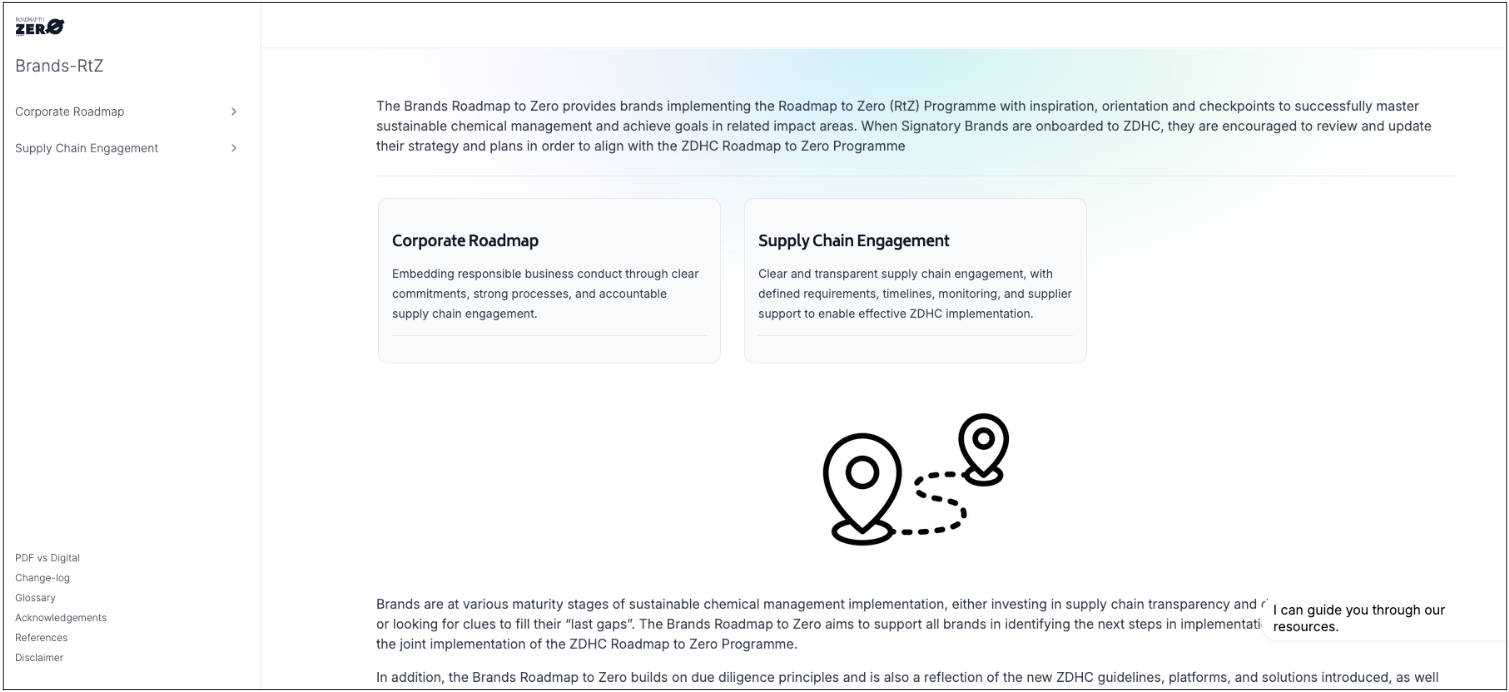
The Brands RtZ is organised around two areas: Corporate Roadmap and Supply Chain Engagement. Together, these areas guide brands through both the internal foundations required for implementation and the actions needed to drive progress across the supply chain.
Within each area, the guidance is structured into chapters covering key aspects of implementation, supported by practical steps and additional context to guide brands through their journey.
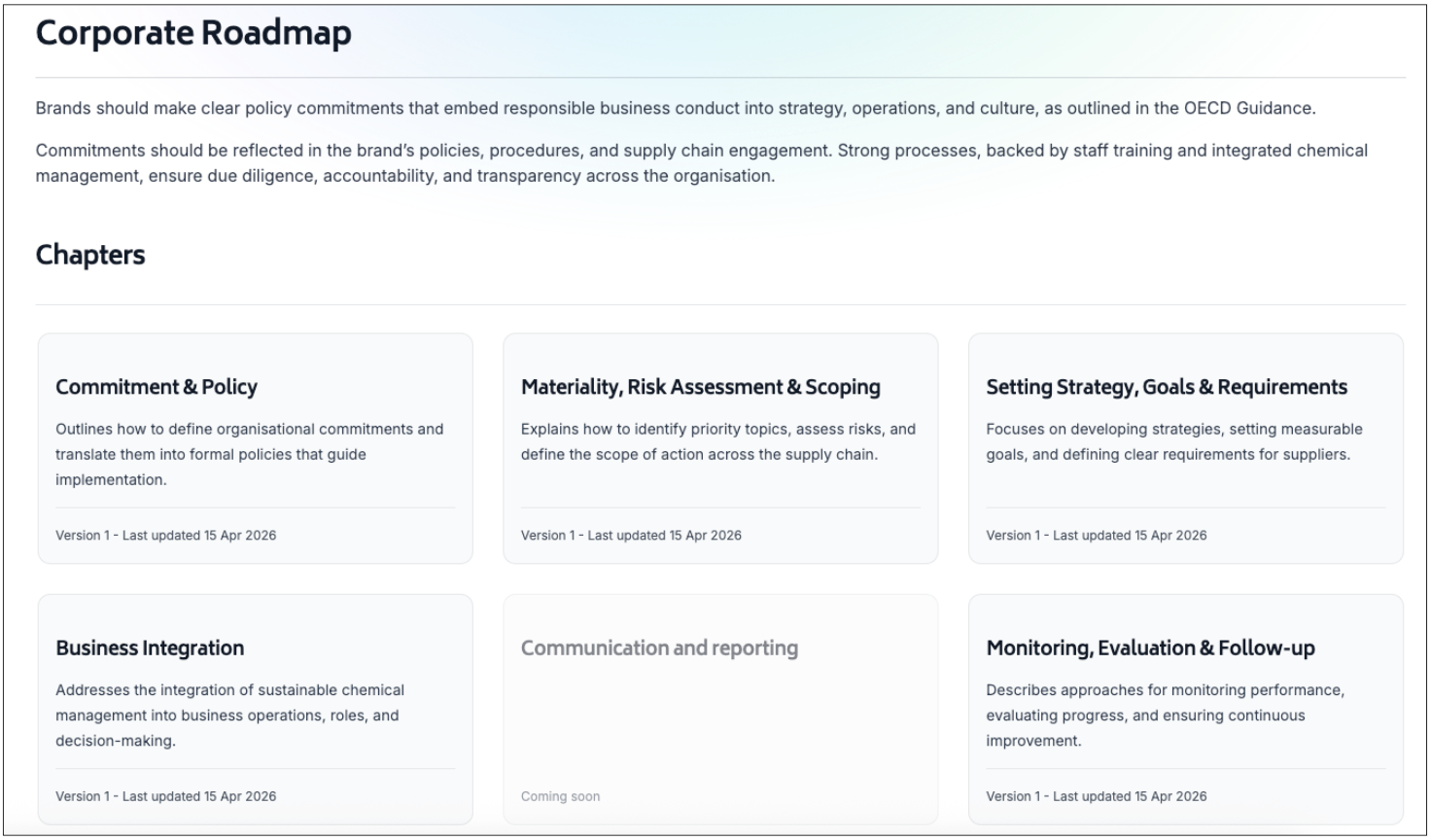
Corporate Roadmap
The Corporate Roadmap focuses on how brands build the internal foundation for implementation. It covers the areas needed to embed sustainable chemical management into strategy, governance and day-to-day business practice.
Its chapters include:
commitment and policy
materiality, risk assessment and scoping
setting strategy, goals and requirements
business integration
monitoring, evaluation and follow-up
communication and reporting
Across these chapters, brands are guided through defining commitments, embedding them into the organisation, setting goals, and establishing processes to monitor and drive progress.
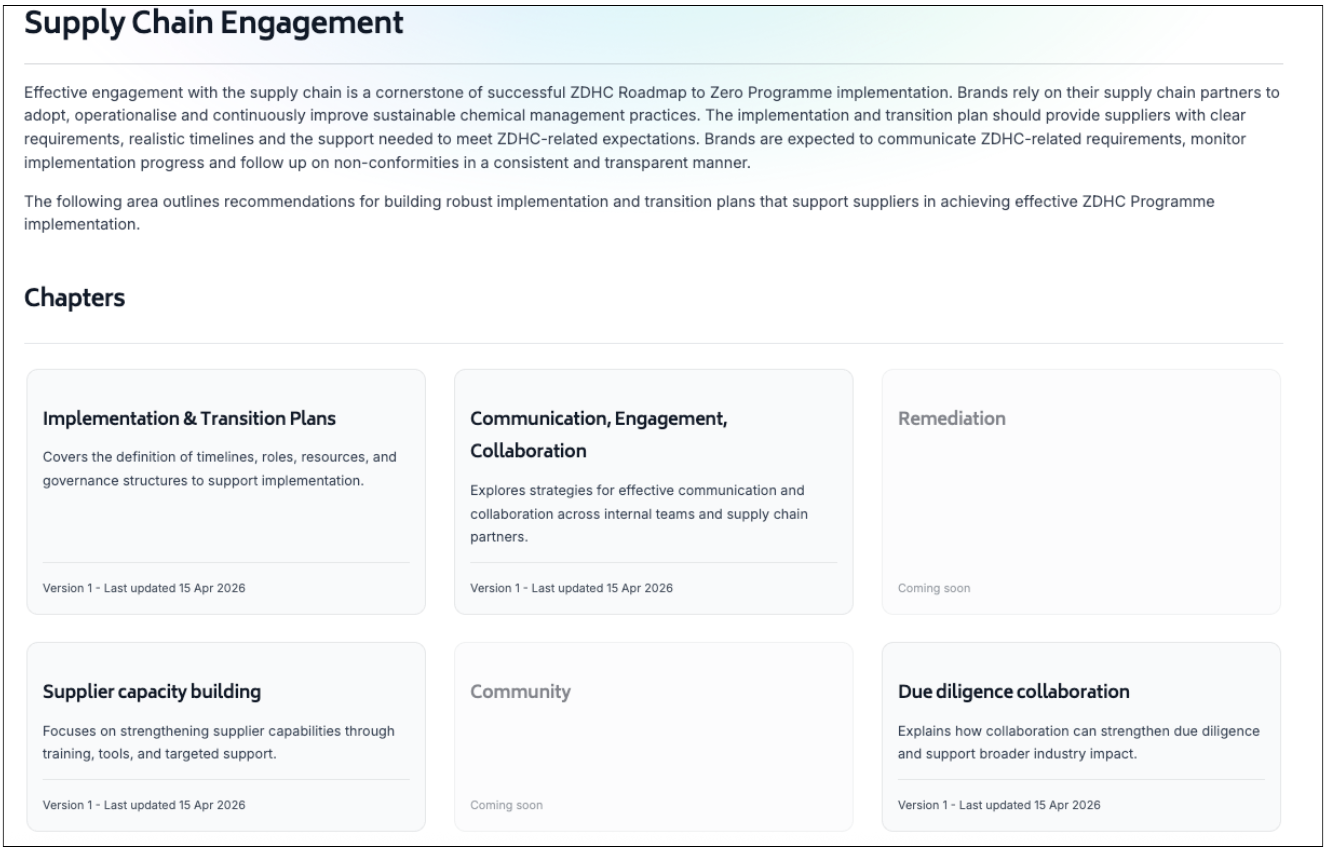
Supply Chain Engagement
The Supply Chain Engagement area addresses how brands translate internal commitments into implementation across the value chain. It provides guidance on how brands engage suppliers, communicate expectations, support uptake and enable continuous improvement.
Its chapters include:
implementation and transition plans
communication, engagement, collaboration
supplier contracts and requirements as responsible engagement
supplier capacity building
community
due diligence collaboration
Within these chapters, brands are guided on how to onboard suppliers, set expectations, support implementation and strengthen collaboration across the Programme.
For guidance on how to navigate and use the Brands Roadmap to Zero, please refer to the Knowledge Base article.
Looking ahead
The Brands Roadmap to Zero complements the Suppliers Roadmap to Zero as part of the broader RtZ Programme framework. Together, these stakeholder roadmaps support a more aligned and coordinated approach to implementing sustainable chemical management.
With additional stakeholder frameworks in development, the RtZ Programme continues to evolve into a connected ecosystem that supports progress towards safer chemistry across the industry.