How AI Could Change Sustainability Forever
There is no shortage of information in sustainable chemical management. Guidance, translations and support platforms are already available. Yet when time is short and decisions are complex, even well-structured resources can feel distant.
The guidance itself works.
The challenge is bringing it closer to the moment of need.
AI helps users get to the information that matters most.
Not by replacing expertise, but by delivering it faster and with confidence.
The real bottleneck isn’t ambition. It’s bandwidth.
ZDHC guidelines exist to safeguard life, land, air and water. They are comprehensive because the stakes are real. In a complex and diverse industry, with sustainable chemistry at its core and supply chains that cross borders and languages, guidance must match the complexity of reality.
However, completeness has a cost: cognitive load. Teams often know that information exists, but not where, in what format, or how to translate it into their next step. When search and reformatting consume the day, improvement slows.
This is why ZDHC continues to improve how its guidance works in practice. The new Supplier Roadmap to Zero provides clearer pathways through requirements. The ZDHC Community Forum brings together peers, allowing them to exchange and refine answers. These steps make knowledge more navigable.
Alongside clearer documents sits another lever: AI technology.
Practical support: what Zeddy brings
Zeddy is an AI assistant built to help people move faster from question to decision.
Ask a sustainable chemical management question and receive a concise answer in your own language, linked directly to the relevant line in the requirement. Ask for actions and receive a checklist ready for a meeting that afternoon.
In early pilots, users reported significant time savings, often exceeding 80%, for cross-document, multilingual look-ups. Less friction. Fewer errors. Faster alignment.
Zeddy uses modern language models, but its real strength lies in the safeguards and structure: answers are always sourced, rules remain intact, and users can trace every step.
Why this works
When guidance becomes navigable knowledge, three changes follow:
- Onboarding shortens. New colleagues learn confidently.
- Consistency strengthens. A question asked twice brings the same answer.
- Time shifts to action. More improvement. Less administration.
None of this is about glossing over complexity. In sustainable chemical management, some things cannot be simplified without losing meaning. The point is to simplify the journey to the right detail, not the detail itself.
Where this is heading
Zeddy is an opening move. The journey points to a broader system in which guidance behaves like a living resource:
A future where an AI assistant recognises where you are in the process, understands the unique situation you face, and offers guidance tailored to that context. A future where it helps identify potential risks earlier, so teams can act before problems surface.
The destination is not another chatbot. It is a trusted layer that sits between complex knowledge and daily decisions, making the right thing the easy thing.
About the Author
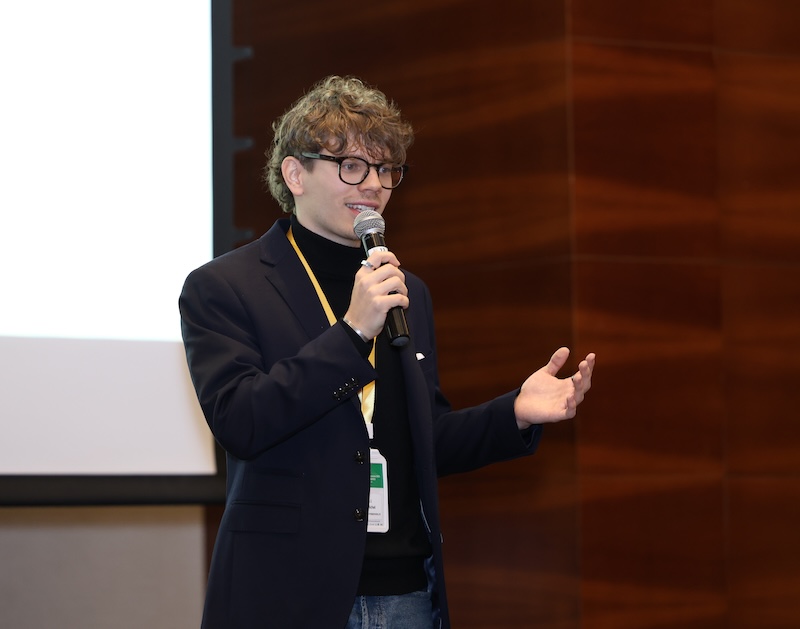
Maximilian Michel works at SaproLab, the IT development company working closely with ZDHC on many digital projects.
"My role is to listen to the people who work with these requirements every day and shape tools that make their progress easier. The lesson is clear: when it is simple to find what matters, action follows.
ZDHC’s mission is ambitious because it must be. Achieving it requires both robust requirements and the ability for thousands of people to apply those requirements quickly and confidently.
Editorial improvements like the Suppliers Roadmap to Zero and technological support like Zeddy move together in the same direction.
The foundation is built on comprehensive guidance.
The future will be built by clarity that drives movement."